Define use and claims before price
“Wet wipes” is not one quotation unit. Start with the user, body area or surface, frequency of use, rinse-off expectation, target countries and sales channel. State whether the concept is for baby or adult skin cleansing, make-up removal, household surface cleaning or another defined purpose. Then list every proposed claim, including antibacterial, disinfecting, sensitive-skin, dermatologically tested, fragrance-free, biodegradable, plastic-free and flushable. Classification and evidence depend on the product as presented, not only on the liquid formula.
Create a separate SKU brief for every lotion, fragrance, substrate, sheet size, count and pack format. Use the personal-care buyer page or the cleaning-products page to frame the category, but do not use a catalogue image as proof of availability, minimum order, certification, composition or lead time. Ask each bidder to confirm those points for the named factory and SKU.
Choose the regulatory route before artwork
For a wipe whose main purpose is cleaning or caring for human skin, the cosmetic route may apply. Regulation (EC) No 1223/2009 requires an EU responsible person for cosmetic products and a product information file. That file links the finished formula to the safety report, manufacturing method and good-manufacturing-practice statement, claim support and other prescribed information. Notification and labelling also belong to the final marketed product, not to a generic base formula.
A disinfecting or other biocidal claim can move the project into a different route. Regulation (EU) No 528/2012 governs biocidal products and treated articles, while the European Commission explains when treated-article labelling is triggered. A general consumer wipe outside a sector-specific regime may still fall under Regulation (EU) 2023/988 on general product safety. Do not ask the factory to “add antibacterial” after sampling. Obtain a written classification rationale from the responsible EU operator before formula, testing and artwork are frozen.
Lock substrate, lotion and evidence
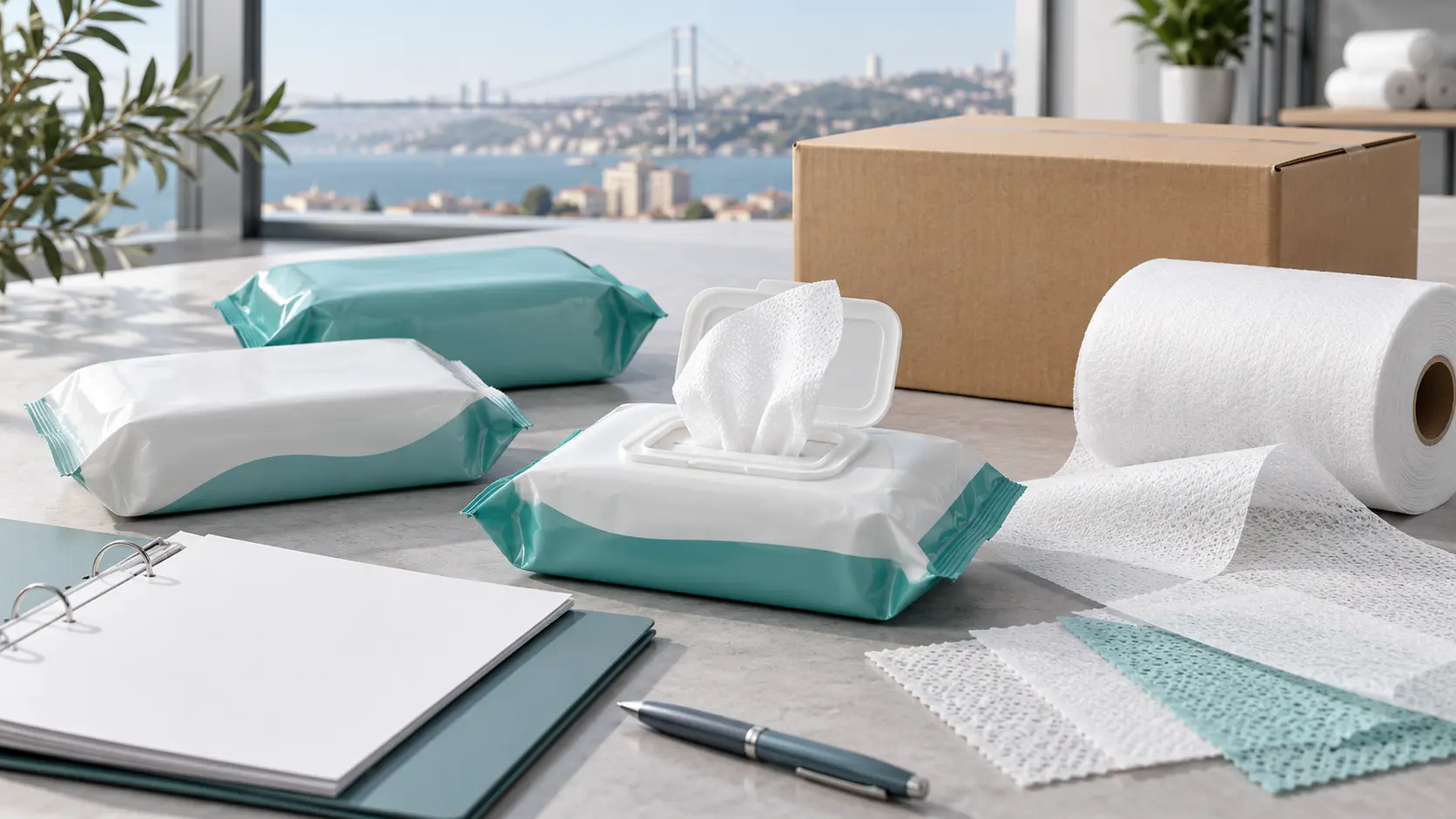
Specify the nonwoven composition, basis weight, dimensions, embossing or texture, colour, folding method and tolerances. Ask whether the substrate contains plastic and require the declaration to identify the exact supplied material. For the lotion, request a dated formula for the offered SKU, ingredient naming appropriate to the chosen route, relevant concentration ranges, pH specification, microbiological criteria, preservative system, fragrance or allergen information, storage conditions and compatibility with the wipe and pack.
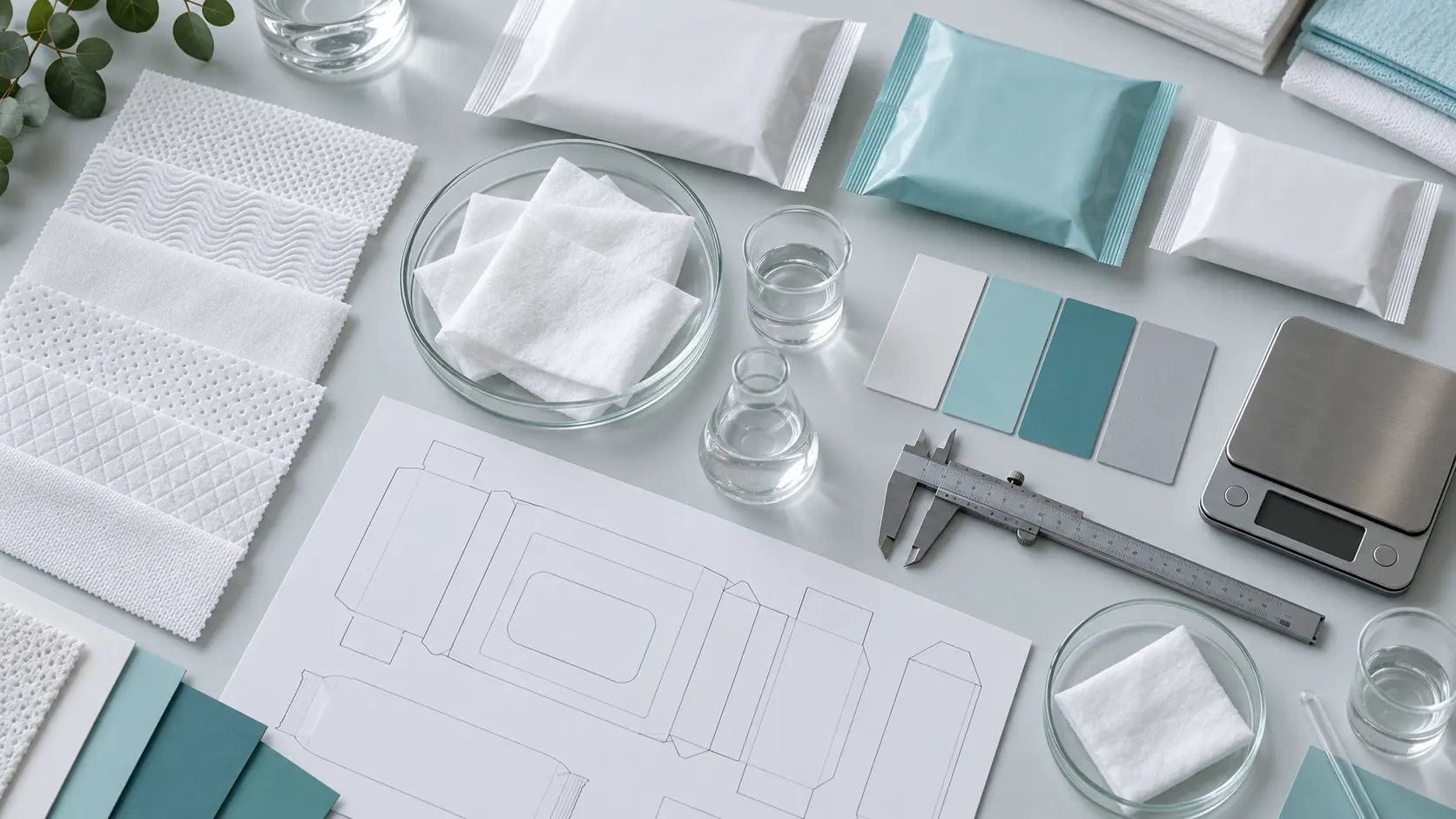
Define the sample and test plan before comparing claims. Useful buyer checks can include sheet dimensions and mass, liquid loading, dispensing force, interfold continuity, pack leakage, closure cycling, evaporation or moisture-loss studies, microbiological quality and stability or compatibility work appropriate to the classification. Record product code, lot, method, date, acceptance limit and responsible laboratory for every result. “Dermatologically tested”, “99% water”, biodegradability, plastic-free and flushability each need a precise definition and evidence matched to the finished product and destination.
Approve dispensing and transport packs
Fix pack material and layer structure, wipe count, fill quantity, opening, resealable label or rigid lid, tamper evidence, code position and barcode area. Agree how many opening cycles the closure must survive and how the last sheet should dispense. Test upright, inverted and compressed packs across intended storage and transport conditions. A good first-use sample does not prove moisture retention through shelf life.
Then define units per case, inner protection, case dimensions and gross weight, pallet pattern, stretch wrap and stacking limits. Review the retail pack and export carton together. Use the private-label workflow to assign ownership for formula approval, dieline, translations, print proof, sample sign-off and change control.
Build the EU artwork file from verified data
Build a controlled artwork checklist for the chosen route and destination countries. Reconcile product identity and function, directions, warnings, responsible operator details, quantity or count, batch reference, durability information, ingredients where required, claims and disposal instructions with the approved specification. Language and presentation requirements must be checked for each sales country before print approval.
If the product is a pre-wetted personal-care or domestic wipe containing plastic, review the harmonised marking rules in Commission Implementing Regulation (EU) 2020/2151. Do not copy a marking from a competitor: determine whether the supplied substrate is within scope and use the official artwork and language version applicable to the pack. Claims such as biodegradable or plastic-free must remain proposed until material identity, test basis and destination rules are verified.
Send one comparable wet-wipes RFQ
- SKU, intended user, use area, destination countries and sales channel
- Proposed classification, responsible EU operator and complete claim list
- Substrate composition, basis weight, sheet size, fold, texture and tolerances
- Final lotion formula, pH, preservation, microbiological limits and fragrance status
- Wipe count, liquid loading, pack structure, closure and coding position
- Product-specific safety, stability, compatibility, dispensing and leakage evidence
- Artwork languages, warnings, disposal marking and change-control owner
- Case and pallet data, sample route, price, minimum order, timing, quotation validity and Incoterms® rule with named place
Require suppliers to complete the same table and identify deviations explicitly. Align the commercial fields with the comparable export quote guide. Price, stock, minimum order, certification, regulatory status and lead time remain supplier- and order-specific until confirmed in writing. Share the target market, intended use and pack brief through the Marnivo inquiry form for a case-specific discussion.