Define the use case before asking for a price
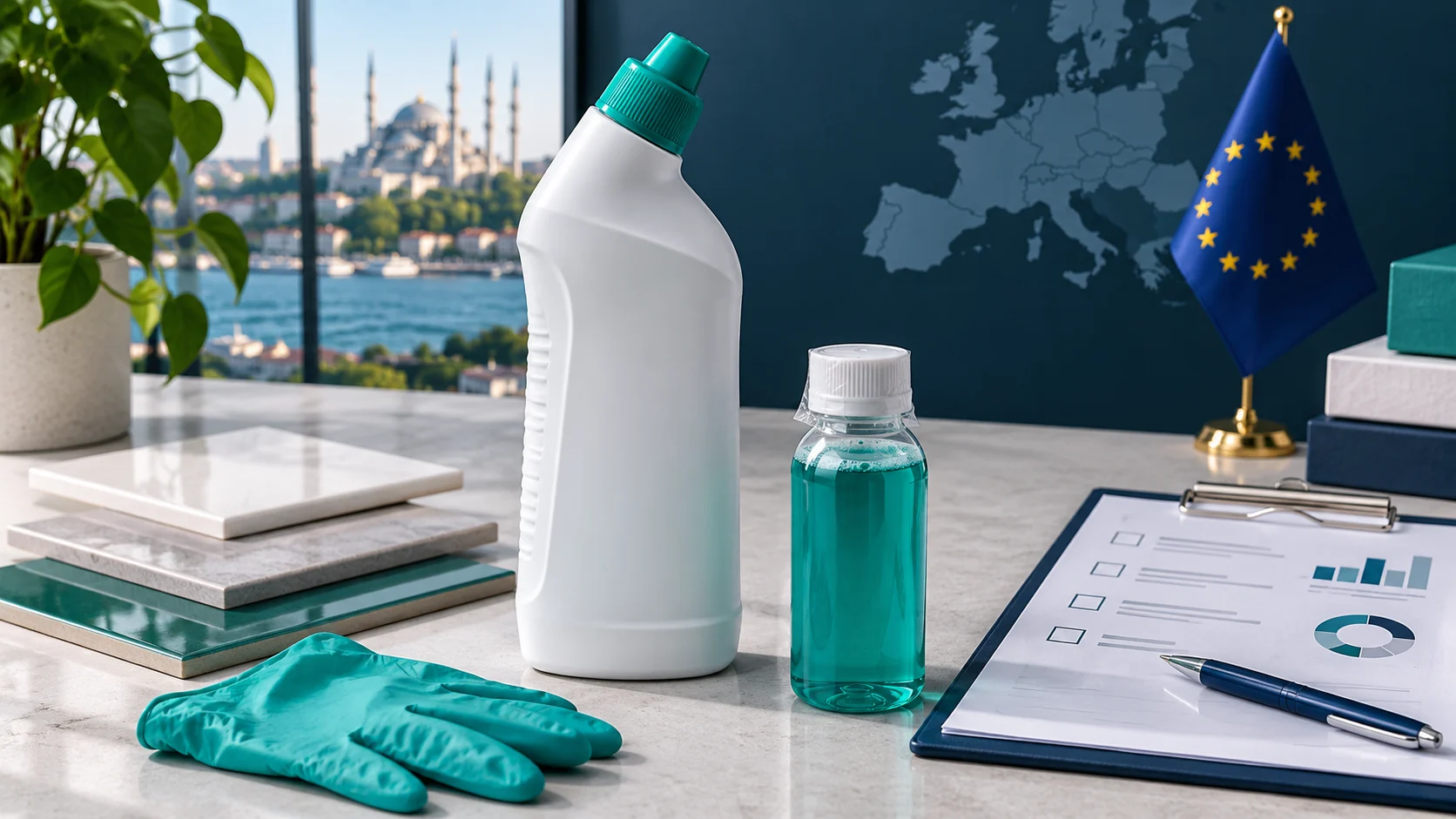
“Toilet cleaner” can describe products with different purposes and hazard profiles. State whether the brief concerns routine bowl cleaning, mineral-scale removal, stain control, fragrance-led maintenance or another defined use. Record the destination countries, consumer or professional channel, application method, expected contact time, rinse instructions, pack size, closure concept, colour and fragrance position. Do not combine an acidic descaler, a bleach-based product and a mild maintenance cleaner in one price comparison.
Describe the surfaces and deposits the product must address, but do not ask a supplier to copy another brand. The cleaning-products buyer page frames the category, while the private-label workflow assigns responsibility for specification, formula, samples, artwork and change control. Neither page proves current stock, minimum order, certification or delivery time.
Control formula identity and incompatible changes
Request a formula code and revision, composition information needed for detergent disclosure and mixture classification, active-acid or other functional system, surfactant and thickener identity, fragrance, preservative and dye, plus agreed methods and limits for appearance, odour, density, pH and viscosity. Link the finished-product specification, safety data, label draft, signed sample, production recipe and poison-centre data to that same revision.
Make incompatible chemistry an explicit control point. The buyer should not infer that products can be mixed or that one set of instructions suits every formula. Require the supplier and qualified EU reviewer to decide the warnings, use instructions and change impact for the actual composition. A change in acid system, fragrance, colour, preservative, raw-material grade, production site or closure can affect performance, classification, label text, packaging compatibility or notification data even when the front label appears unchanged.
Compare samples with one controlled protocol
Turn “removes limescale” or “clings under the rim” into a written comparison. Define the ceramic or other test substrate, deposit preparation, amount applied, contact time, temperature, water conditions, brushing or rinsing step, repeat count, reference product and scoring method. Measure relevant outcomes such as deposit removal, visible residue, colour change, odour, gel placement, cling time, coverage, rinse behaviour and surface compatibility. Blind coded samples where practical and photograph the same area under fixed lighting.

Do not use one aggressive bench test as evidence for every surface or consumer claim. Run the final formula in the final pack after defined storage and transport simulation. Separate internal selection criteria from label claims such as antibacterial action, disinfection, biodegradable ingredients, reduced environmental impact or prolonged protection. Those statements may trigger different evidence or legal review; include them only after the responsible market reviewer confirms the exact wording and support.
Map the current EU detergent, CLP and UFI file
For a 2026 EU launch, assess the final product under the current Regulation (EC) No 648/2004 on detergents. Build the ingredient information, consumer label and any required supporting file from the released formula. Regulation (EU) 2026/405 is already in force but, apart from specified provisions, applies from 23 September 2029 and repeals the current framework from that date. Treat the future digital product passport and operator duties as a dated transition project, not a current 2026 label claim.
Document self-classification of the final mixture under the CLP Regulation. The final decision determines any pictograms, signal word, hazard and precautionary statements, supplemental information and packaging features. ECHA explains that suppliers classify mixtures and that CLP labels must identify the product and EU-established supplier. Where Annex VIII notification applies, agree the responsible EU importer or downstream user, notification route and UFI before market placement. One UFI corresponds to one mixture composition; never borrow it from another formula.
Validate the angled pack, closure and artwork
Specify bottle resin and weight, angled-neck geometry, applicator opening, closure and tamper evidence, fill volume and tolerance, label construction, code area, case and pallet. Test the filled pack for leakage, controlled dispensing, closure torque, repeated opening, stress cracking, paneling or swelling, colour migration, label adhesion, code legibility, drop or compression performance and stability under the agreed storage and transport conditions.
For a hazardous mixture supplied to the public, CLP packaging must resist the contents and prevent unintended escape. Child-resistant fastening and tactile-warning requirements depend on the final classification and Annex II criteria; they are not automatic features of every toilet cleaner. Do not release artwork until the formula classification, responsible-supplier details, destination languages, detergent disclosures, UFI where applicable and use instructions are frozen.
Send one comparable RFQ matrix
- Destination, channel, intended use, substrate, deposit, contact time, rinse method and pack size
- Formula revision, functional system, composition disclosure, physical methods, limits and change controls
- Signed sample, controlled test protocol, reference, repeats, scorecard and acceptance limits
- Detergent information, final CLP decision, safety data and PCN/UFI responsibility where applicable
- Bottle, applicator, closure, label, filled-pack compatibility, transport tests and artwork ownership
- Quantity, named delivery place, price basis, minimum order, lead time, offer validity and declared deviations
Ask every bidder to complete the same matrix and separate technical approval from the commercial comparison. The comparable export quote guide structures delivery terms and inclusions. Submit the controlled brief through the Marnivo inquiry form for a case-specific sourcing review.