Define the product before comparing jars
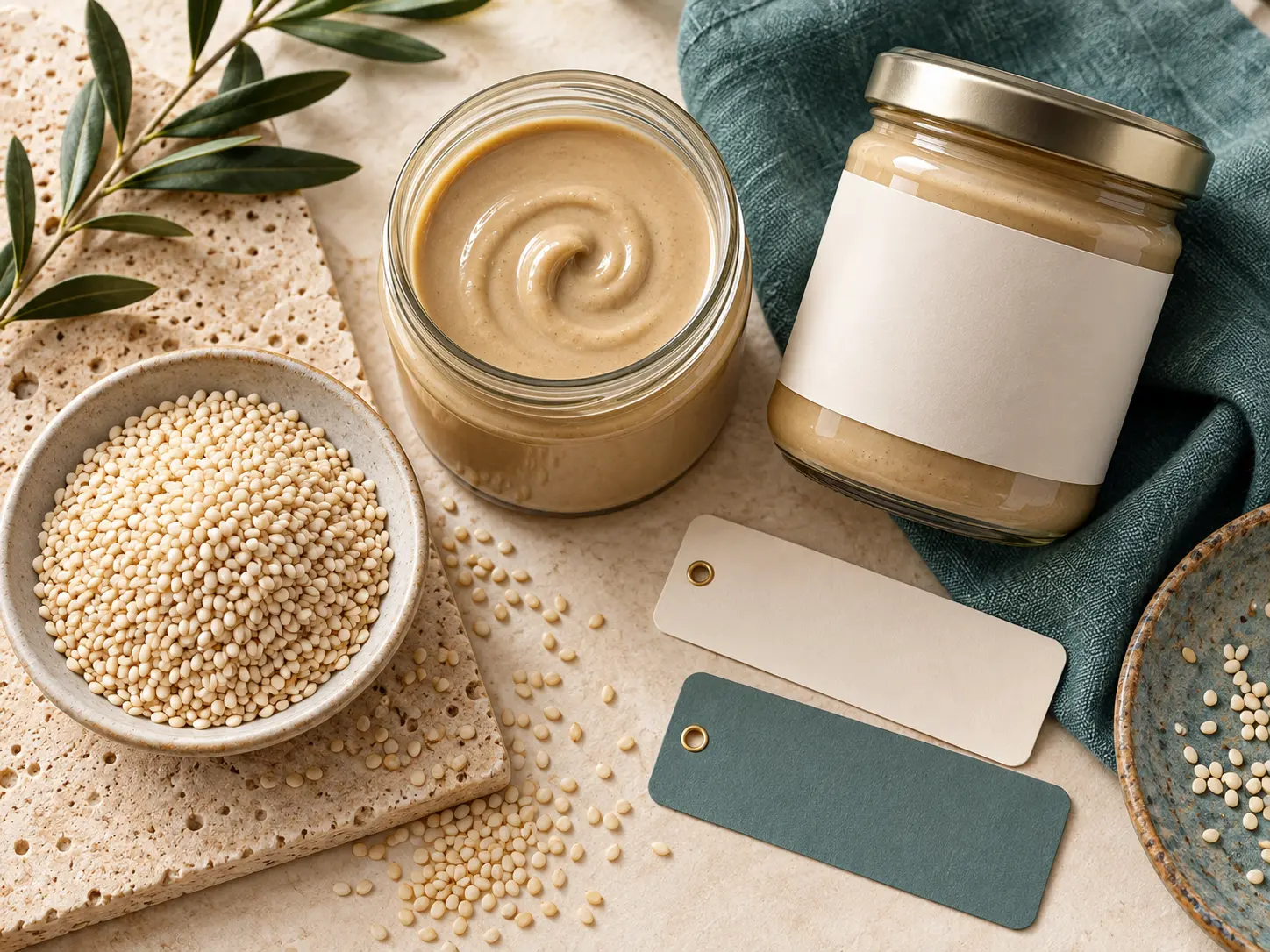
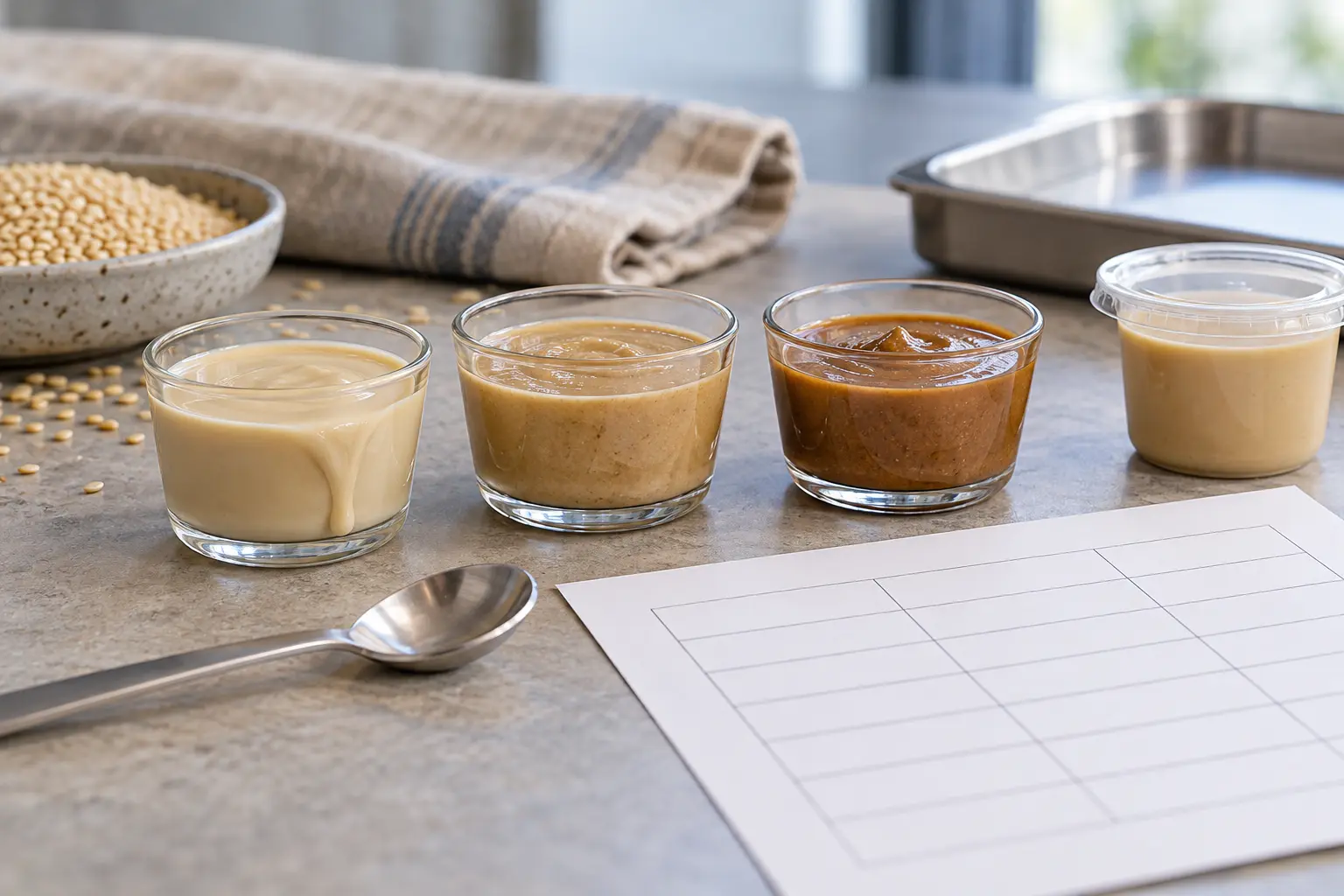
Tahini is a useful example of why a private-label request must describe more than a product name. Tell the supplier whether the intended line is for retail, foodservice or ingredient use, and whether you seek a particular roast profile, colour, texture, ingredient list and consumer-unit size. Ask the manufacturer to state its sesame source and processing description for the proposed product, but do not assume one origin or production method across offers. A pale, fluid sample and a darker, thicker sample can serve different preferences. Your brief should identify the target market, sales channel and an estimated volume as a planning assumption. The supplier should mark which attributes are already available and which require development. Our private-label food brief gives the wider brand team a starting structure.
Make sensory and physical checks repeatable
Request dated samples linked to a specification version and proposed production run. Record aroma and taste, colour range, smoothness or particle feel, flow at a stated temperature and the behaviour of oil separation over an agreed observation period. Define how a sample will be mixed before comparison and what variation the buyer will accept; otherwise two people may judge different conditions. Ask for the intended ingredient composition, process controls, storage instructions and evidence supporting the proposed shelf life for the exact pack. If your quality team requires analytical or microbiological results, define the tests and the lot to which each report relates. Do not treat a glossy photograph, an isolated sample or a generic certificate as proof that every later batch will match.
Treat sesame allergen information as a design input
Sesame is central to the product, so allergen wording must be designed into the label from the start. The European Commission’s allergen guidance identifies sesame seeds among the substances that must be clearly indicated when used as an ingredient in food sold in the EU. Its mandatory food information guidance also covers the food name, ingredients, net quantity, durability date, operator details and nutrition declaration for prepacked foods. Ask the supplier for the exact ingredient and cross-contact information relevant to the proposed line and have the responsible food operator review the finished label. Do not copy an allergen statement or a “free from” claim from another market. The Commission’s language guidance makes destination-market presentation part of this review.
Choose the pack with the product
Glass jars, plastic tubs and foodservice pails change unit weight, closure, case count, pallet pattern, handling and label space. Ask for the pack material, closure and seal specification, tamper-evidence approach, unit net weight, case dimensions, barcode ownership and where the lot and durability markings appear. For EU sales, the European Commission’s food-contact-materials overview explains the general framework for materials intended to touch food; confirm the proposed packaging and supporting documentation for the actual material and market. Ask how the supplier substantiates shelf life in the chosen pack, including its storage assumptions. A private-label design proof should be approved only after the ingredient data, language, operator details and print dimensions are settled.
Compare offers on one commercial basis
Send the same specification to each potential supplier and request a line-by-line offer: product version, pack, units per case, currency, unit and case price, minimum order for that exact configuration, production lead time, offer validity, payment stages, named delivery place and documents offered. Separate one-off artwork or packaging costs from repeat-order pricing and ask which figures are firm or indicative. Availability and minimum quantities vary by supplier and format; reconfirm them at order time. Our comparable export quote guide provides a worksheet approach. If you are placing tahini within a wider pantry range, the grocery staples overview can help organize the assortment discussion, while the actual tahini specification remains separate.
Prepare the first order and a precise enquiry
For an EU destination, use the European Commission’s Access2Markets assistant to check the appropriate classification and current import steps for the actual origin and destination. Do not infer a duty rate from a generic “sesame paste” description. Before approving a first shipment, match the purchase specification and label proof with the invoice, packing list, batch identifiers and agreed transport documents. A workable enquiry reads: “Please quote private-label tahini for [country/channel], [jar or tub and net weight] and [estimated volume]. Provide a dated sample and specification, sesame and other ingredient details, allergen and cross-contact data, proposed quality and shelf-life evidence, packaging information, label-language options, minimum for this exact format, lead time, delivery term and available documents. Identify items still to be confirmed.” Review gaps before placing the purchase order.