Define the blend and buying unit before asking for price
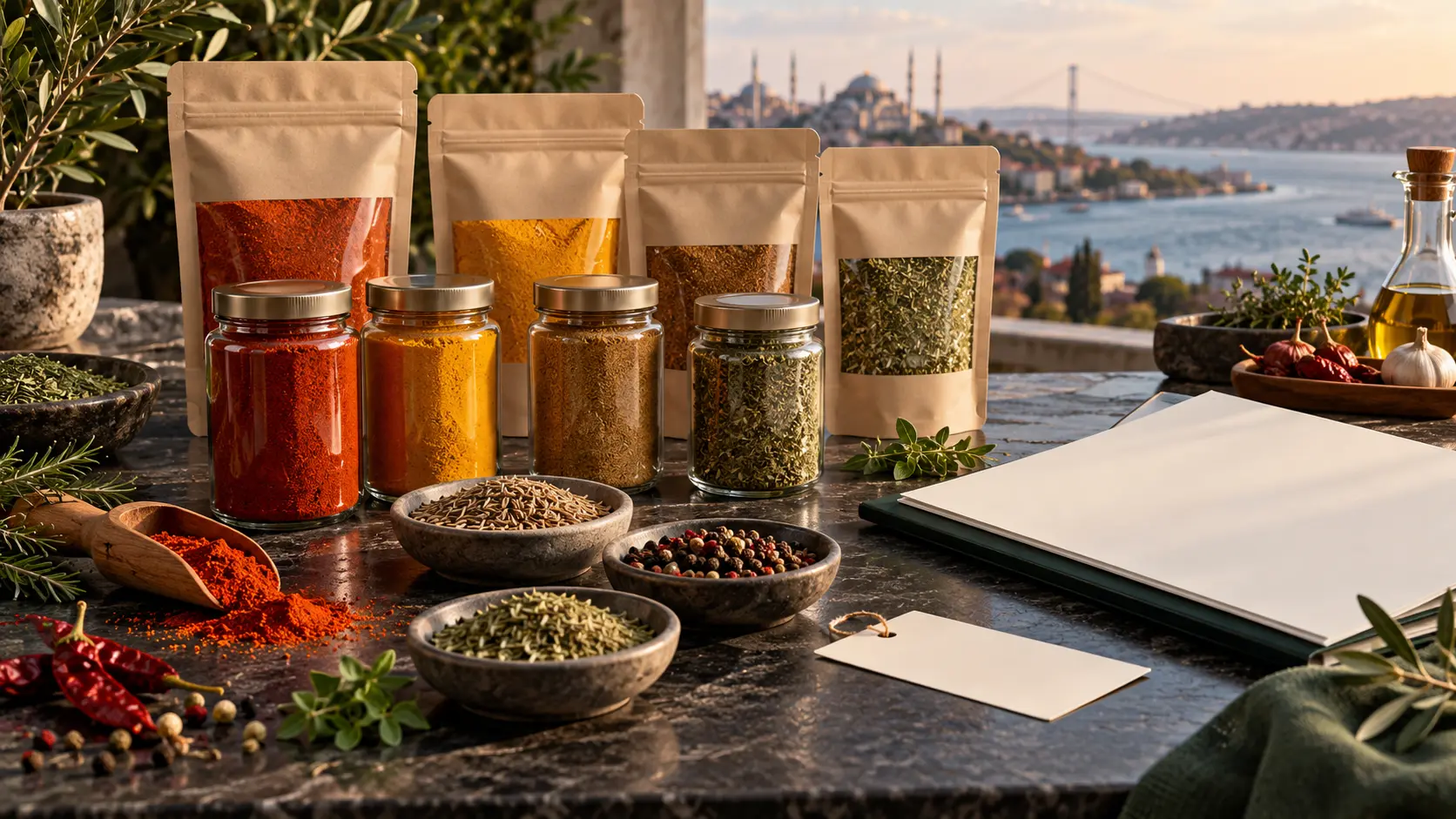
“Seasoning blend” is not a complete quotation unit. State the intended food application, destination country, recipe style, grind or cut, heat level, salt target, carrier or anti-caking system if proposed, and whether the product is sold to consumers or used by a food manufacturer. Fix net weight, primary pack, units per case and expected use rate. A retail barbecue rub, an industrial soup seasoning and a pure herb mixture need different specifications even when their colour looks similar.
Create one brief for every recipe and pack format. Record sensory targets with physical references where possible: colour range, particle-size distribution, aroma, pungency, flow, visible inclusions and tolerance for separation or clumping. The grocery staples buyer page places spices within the wider dry-food programme, while the private-label workflow assigns recipe, artwork, sample and change approvals. Catalogue pictures do not prove stock, price, minimum order, certification or lead time; confirm each point in writing for the named factory and SKU.
Lock raw-material identity, recipe and change control
Request the complete formula in descending ingredient order and link every spice, herb, salt, sugar, starch, yeast extract, flavouring or additive to a raw-material specification. Specify the botanical or common identity, plant part, origin information required for traceability, treatment status, particle size and agreed authenticity method where relevant. The European Commission's coordinated action on herbs and spices is a useful reminder that identity and composition deserve their own controls; it is not a pass certificate for any supplier.
Require a controlled master recipe and a change-notification rule. Substitution of a botanical source, country, processor, carrier, flavouring, additive, sterilisation route or pack material should be assessed before use. Define how rework is handled and how a batch can be traced back to incoming lots. A generic product name or supplier certificate cannot replace this recipe-level file.
Build a lot-specific contaminant and residue plan
Map hazards from the actual ingredients and origins rather than copying one standard test panel. Under Regulation (EU) 2023/915, maximum levels apply to specified contaminant-food combinations; the current product and ingredient categories must be checked before setting limits. For mycotoxins, metals or other relevant contaminants, state analyte, limit, method, sampling basis, laboratory and decision rule. Sampling matters because a result cannot represent a lot unless the agreed plan is followed.
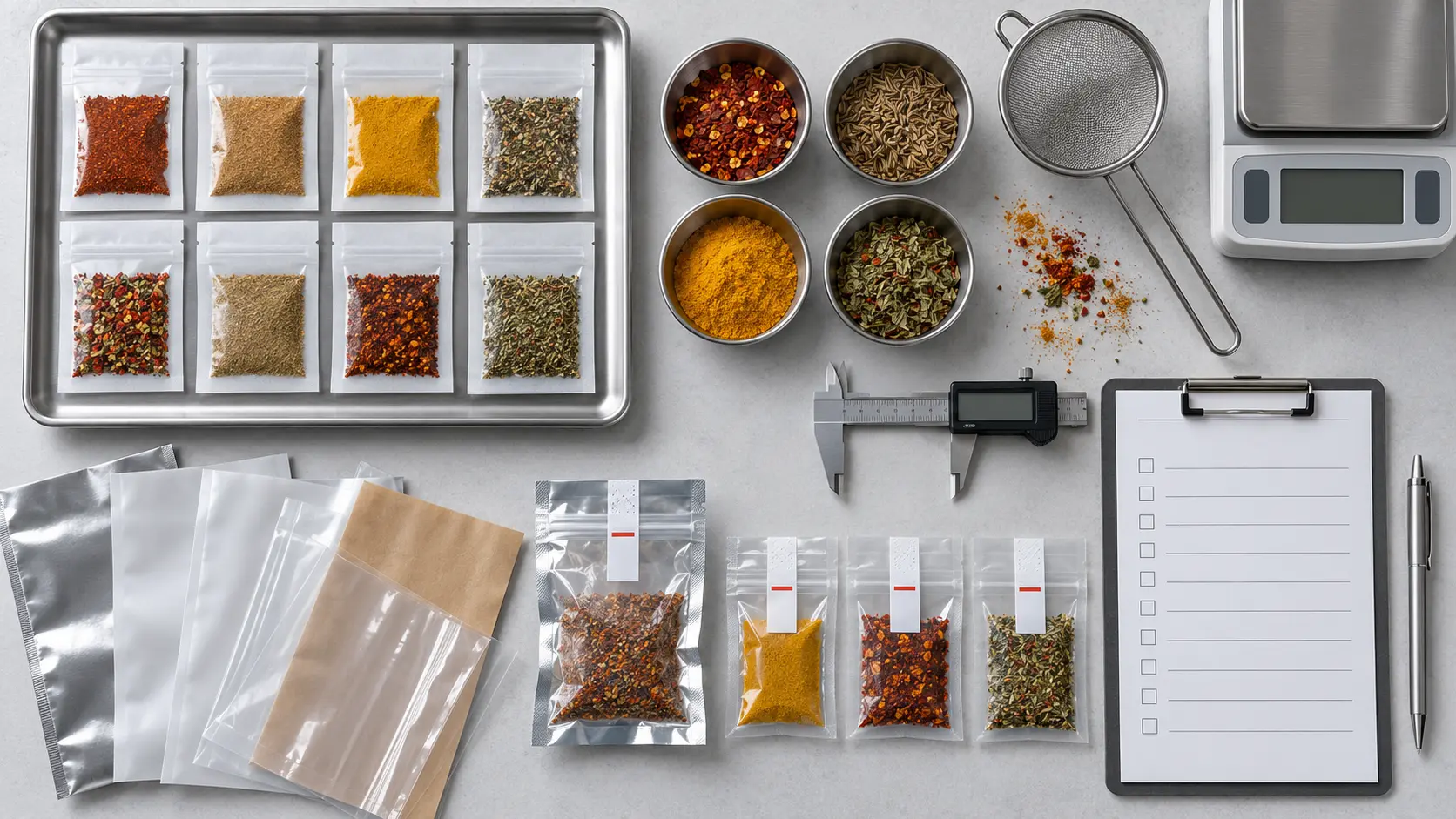
Pesticide-residue requirements are governed by Regulation (EC) No 396/2005. Use the official EU Pesticides Database for the relevant commodity and current residue definition; do not treat one result as universal for every spice. Add buyer-defined microbiological, foreign-material and treatment-verification criteria with methods and sampling points. If steam or another microbial-reduction step is proposed, document the actual process and its effect on the agreed sensory and physical specification.
Verify additives, allergens and label data from the final recipe
Pure spice mixtures and compound seasonings can fall into different food-category questions. Check every proposed anti-caking agent, colour, preservative or other additive against its food category and conditions of use under Regulation (EC) No 1333/2008; permission in a sauce, snack or another application does not automatically permit it in the blend as sold. Also distinguish additives from flavourings and ordinary ingredients in the technical file.
Build the EU artwork data from the approved formula and pack. Regulation (EU) No 1169/2011 frames mandatory food information and allergen emphasis. Identify intentional allergens and possible cross-contact separately, including any allergenic carriers or inclusions. Confirm the legal name, ingredient list, quantitative declarations where applicable, net quantity, date marking, storage instructions, responsible operator and destination-language text case by case. Check lot identification separately under Directive 2011/91/EU and its implementation in the destination market. Do not turn “natural”, origin, nutrition or health wording into a claim without its specific legal and evidence review.
Approve a production-relevant sample and the final pack
Use a documented sample chain: supplier, factory, item code, recipe revision, incoming-lot references, blend lot, process, date and pack material. Compare colour, aroma, taste in the intended application, particle size, flow, separation, caking and visible foreign material against an acceptance sheet, then retain a sealed reference. Agree which deviations trigger rejection, investigation or reapproval. Price, capacity, minimum order, timing and certification remain offer-specific until written evidence is matched to the offered SKU.
Specify the actual film, pouch, jar or food-service pack, seal or closure, moisture and aroma barrier targets, light protection where relevant, headspace approach, coding area, case and pallet. Food-contact materials must suit the food and intended conditions under the EU framework led by Regulation (EC) No 1935/2004. Request the compliance file for the real material structure. Validate shelf life with the final recipe, process and pack, using stated storage conditions and acceptance criteria rather than only a printed best-before date.
Send one comparable spice-blend RFQ
- Application, destination, recipe, grind, sensory targets, use rate and buying unit
- Full formula, raw-material identities, origins needed for traceability and change rule
- Authenticity controls, contaminant and pesticide-residue plan, methods and sampling
- Microbiology, foreign-material controls, treatment route and production-lot records
- Additive category review, allergen matrix, label languages and artwork owner
- Production-relevant sample, acceptance sheet, retained sample and reapproval triggers
- Final pack structure, food-contact file, coding, shelf-life protocol, case and pallet
- Requested volume, destination, named Incoterms® place, price, minimum order, lead time and validity
Require every bidder to complete the same sheet and mark deviations. The comparable export quote guide structures inclusions, delivery terms and validity. Use the Marnivo inquiry form to share the blend, market and pack brief for a case-specific review.