
Define the intended use before comparing bars
A solid bar sold mainly to clean, perfume or keep human skin in good condition is generally assessed as a cosmetic product. Write that intended use, target user, rinse-off directions, fragrance position, bar mass and sales channel into the brief. Do not use one specification for a body soap, laundry bar and disinfecting bar. The European Commission's cosmetic-product borderline manual explains that a dual-use soap may fall under more than one legal regime, depending on its functions and presentation.
The personal-care buyer page frames the category, while the private-label workflow assigns ownership for formula, artwork, samples and changes. Avoid medicinal, disinfecting or antibacterial positioning unless classification, permitted actives and evidence have been reviewed for the exact product and market.
Freeze formula identity and acceptance limits
Request the full qualitative and quantitative formula needed by the EU responsible person and safety assessor, under appropriate confidentiality. Identify the soap base, fatty-acid or oil inputs, humectants, fragrance, colorants, chelating agents, antioxidants and every other ingredient by its correct cosmetic name. Tie each material to a grade, supplier, specification and change-notification rule. A fragrance name, colour reference or sample photograph is not a controlled formula.
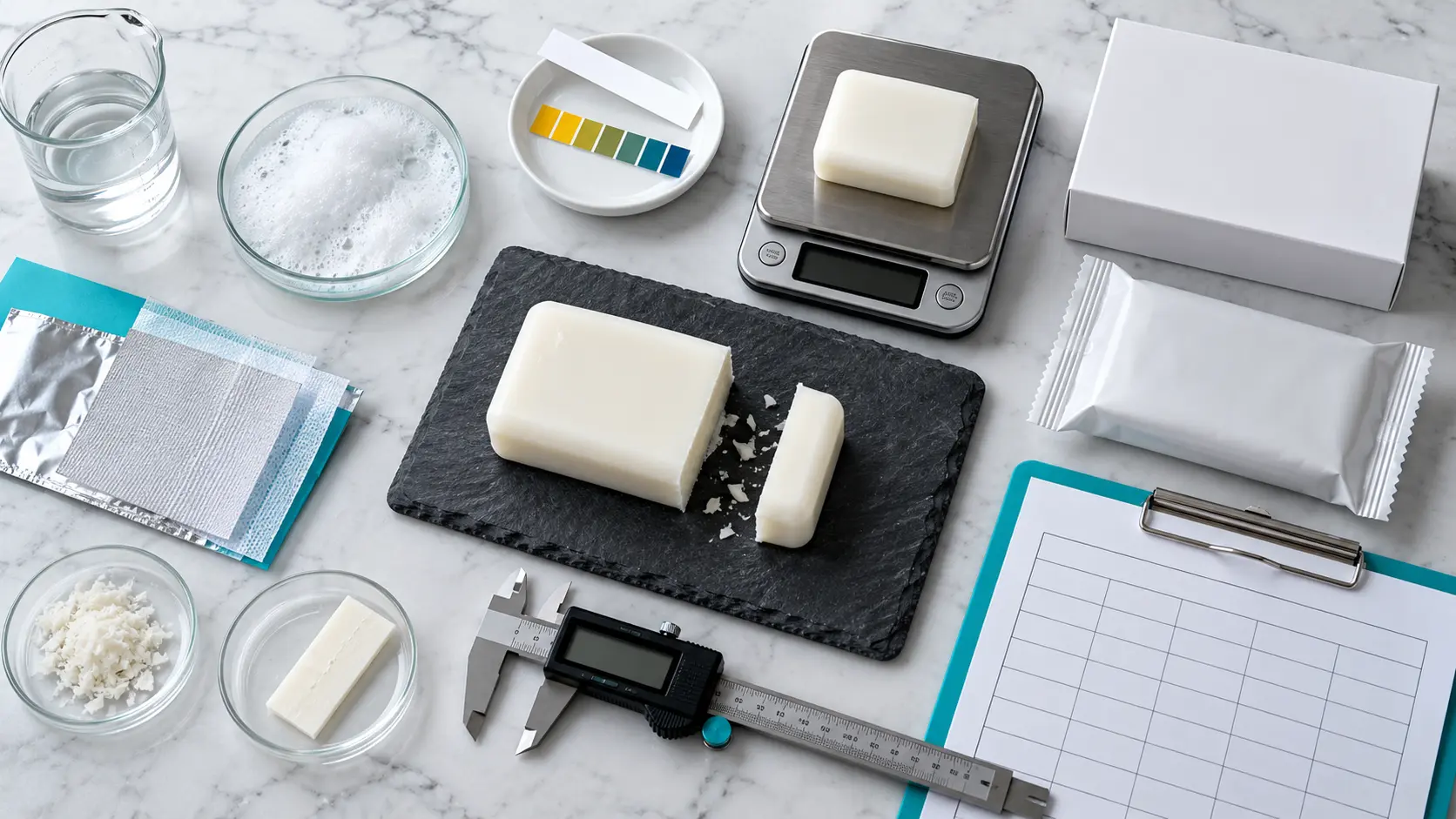
Define measurable finished-bar limits and methods: appearance, odour, colour, mass, dimensions, hardness or wear method, moisture where relevant, pH test preparation, cracking, sweating, fragrance retention and lather method. Agree conditioning time, sample count, tolerance, retained samples and release authority. The buyer should also specify whether embossed artwork, individual wrapping, carton board or multipacks are required.
Build the EU cosmetic file before artwork
Regulation (EC) No 1223/2009 on cosmetic products requires an EU responsible person, safety assessment and cosmetic product safety report, product information file, good manufacturing practice and notification before the cosmetic is placed on the market. Ask who will hold each obligation, which final formula and pack the safety assessment covers, where the file is kept and how post-market information and serious undesirable effects are handled.
The European Commission's Cosmetic Products Notification Portal guidance confirms that responsible persons, and distributors in specified cases, submit product information through CPNP. A portal notification is not a product approval, certificate or substitute for the safety report. Keep formula version, responsible-person data, label images and notification record aligned.
Prove claims against the final formula
Terms such as moisturising, sensitive-skin, natural, vegan, dermatologically tested or long-lasting fragrance need a defined meaning and support appropriate to the claim. Regulation (EU) No 655/2013 requires cosmetic claims to meet common criteria including truthfulness and evidential support. Decide the claim and test plan before printing packaging; do not transfer evidence from another scent, base or supplier.
Use written comparison methods for bar wear, lather, rinse feel, fragrance and pack condition. Record water conditions, conditioning, panel or instrument method, controls and acceptance rules. Separate internal product-selection tests from consumer-facing claims and retain the evidence reviewed by the responsible person.
Validate the real bar-pack combination
Test the finished bar in the proposed wrapper and carton, not only in bulk. Check mass and dimensional change, cracking or deformation, colour and fragrance transfer, wrapper seal, scuffing, moisture interaction, barcode area and case performance under defined storage and distribution conditions. Packaging choice may change fragrance retention and surface appearance, so a successful naked-bar sample does not approve the retail pack.
Regulation (EU) 2025/40 on packaging and packaging waste applies from 12 August 2026, with obligations and transitions depending on the packaging and operator role. Capture component materials and weights, supplier evidence, recyclability information, markings and responsibility allocation for the wrapper, carton, multipack and transport case. Do not treat a kraft appearance or recyclable claim as proof of compliance.
Send one comparable RFQ
- Destination, channel, intended cosmetic use, target user and excluded claims
- Formula version, full ingredient identity, fragrance and colour references, and change control
- Bar mass and dimensions, acceptance limits, conditioning and test methods
- EU responsible person, safety report, PIF, GMP evidence and CPNP responsibility
- Claim wording, substantiation owner and final-formula test plan
- Wrapper, carton, multipack and case specifications plus pack-validation protocol
- Quantity, named delivery place, price basis, minimum order, lead time and offer validity
Ask each bidder to mark deviations on the same sheet and keep technical approval separate from commercial comparison. The comparable export quote guide structures inclusions and delivery terms. Send the completed brief through the Marnivo inquiry form for a case-specific sourcing review.