Define the crisp before comparing offers
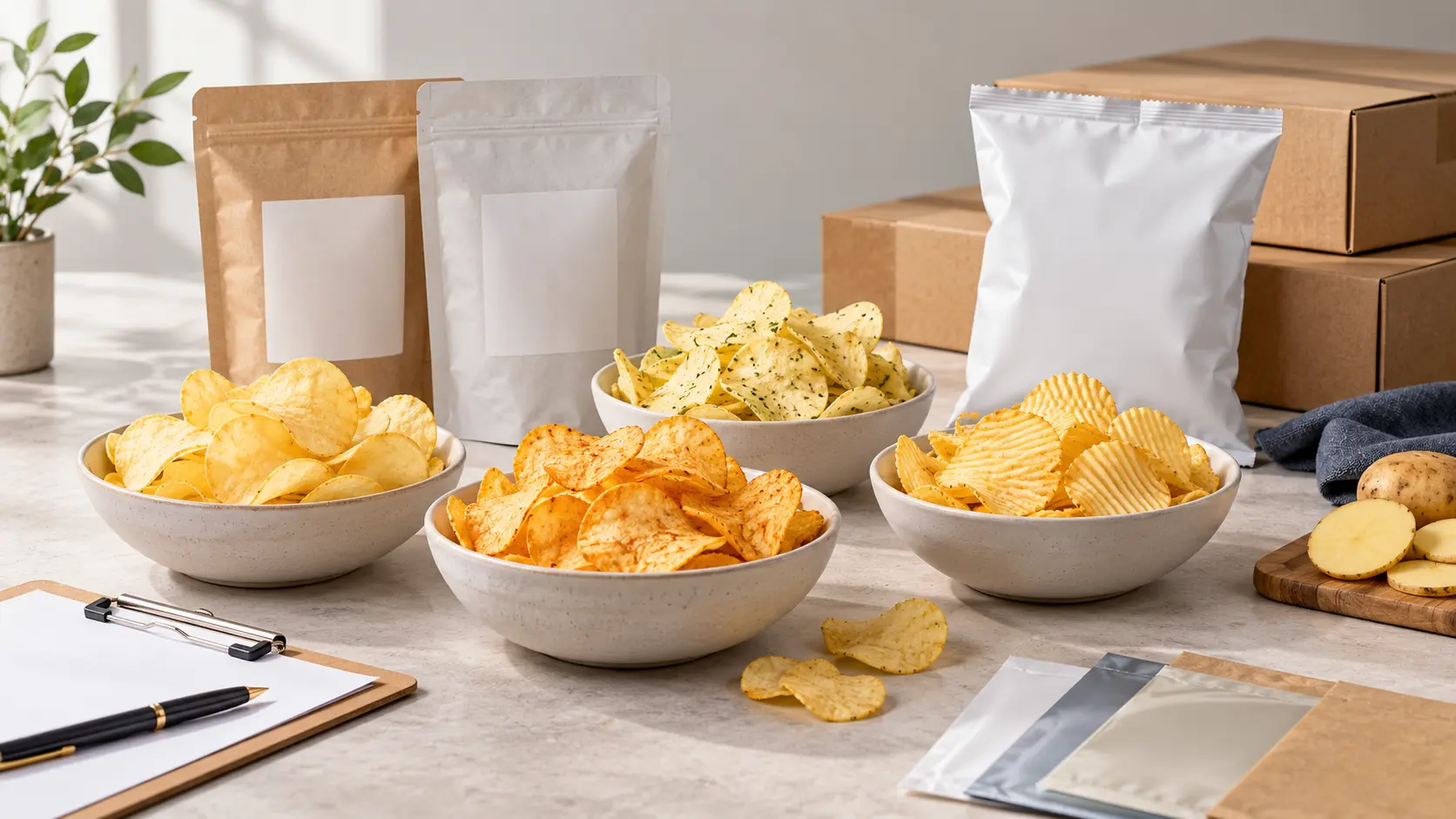
Start with the product the buyer intends to sell: sliced potato crisps or a formed potato snack, the potato and oil system, cut, skin-on or peeled appearance, target piece size, salt or seasoning, pack size and sales channel. Record flavour direction and proposed claims separately. A supplier catalogue or tasting sample may show capability, but it does not establish the formula, factory line, evidence or finished SKU that will be supplied.
Ask every bidder to complete one controlled product sheet covering raw-material requirements, recipe, process, finished-product limits, packaging and change notification. Use the snacks and confectionery buyer page to place the item in the wider range and the private-label workflow to assign formula, artwork, sample and approval ownership.
Turn frying into measurable controls
Colour and flavour depend on potato variety, reducing sugars, dry matter, storage, slice thickness, washing or blanching, fryer time and temperature, oil condition and seasoning. Put those variables in the technical brief instead of approving only a photograph. Agree target colour, moisture or water activity where justified, oil-quality criteria, salt or seasoning coverage, broken-piece tolerance and the methods used to measure them.
Regulation (EU) 2017/2158 requires mitigation measures and sampling or analysis for acrylamide in covered foods, including potato crisps. Its benchmark for potato crisps and potato-based products is 750 µg/kg. Treat that benchmark as a process-performance reference, not the buyer's complete finished-product specification or an automatic pass claim. Ask for the documented mitigation plan, sampling logic, result review and corrective action connected to the proposed SKU.
Review seasoning, allergens and artwork together
Request the full base-crisp and seasoning composition, supplier specifications, additive functions, flavour carriers, allergen status and substitution rules. EU additive permission depends on the exact food category, substance and conditions of use, so the responsible operator should verify every proposed additive against Regulation (EC) No 1333/2008 and the Commission's food-additives database before formula lock.
Regulation (EU) No 1169/2011 frames mandatory food information and Annex II allergen emphasis. Check the legal name, ingredients, allergens, net quantity, date marking, storage, responsible operator, nutrition declaration and destination language on the real artwork. Cross-contact, nutrition and other front-of-pack statements need case-specific evidence; a seasoning name or generic certificate is not enough.
Lock the reference sample and lot-release plan
Use three stages: development samples for direction, a documented reference sample after recipe and pack approval, and a first-production sample made on the intended line. Record formula version, batch or sample code, production and review dates, storage history and acceptance notes. Define colour limits with an agreed reference or instrument, not memory, and evaluate the crisp in the intended retail pack.
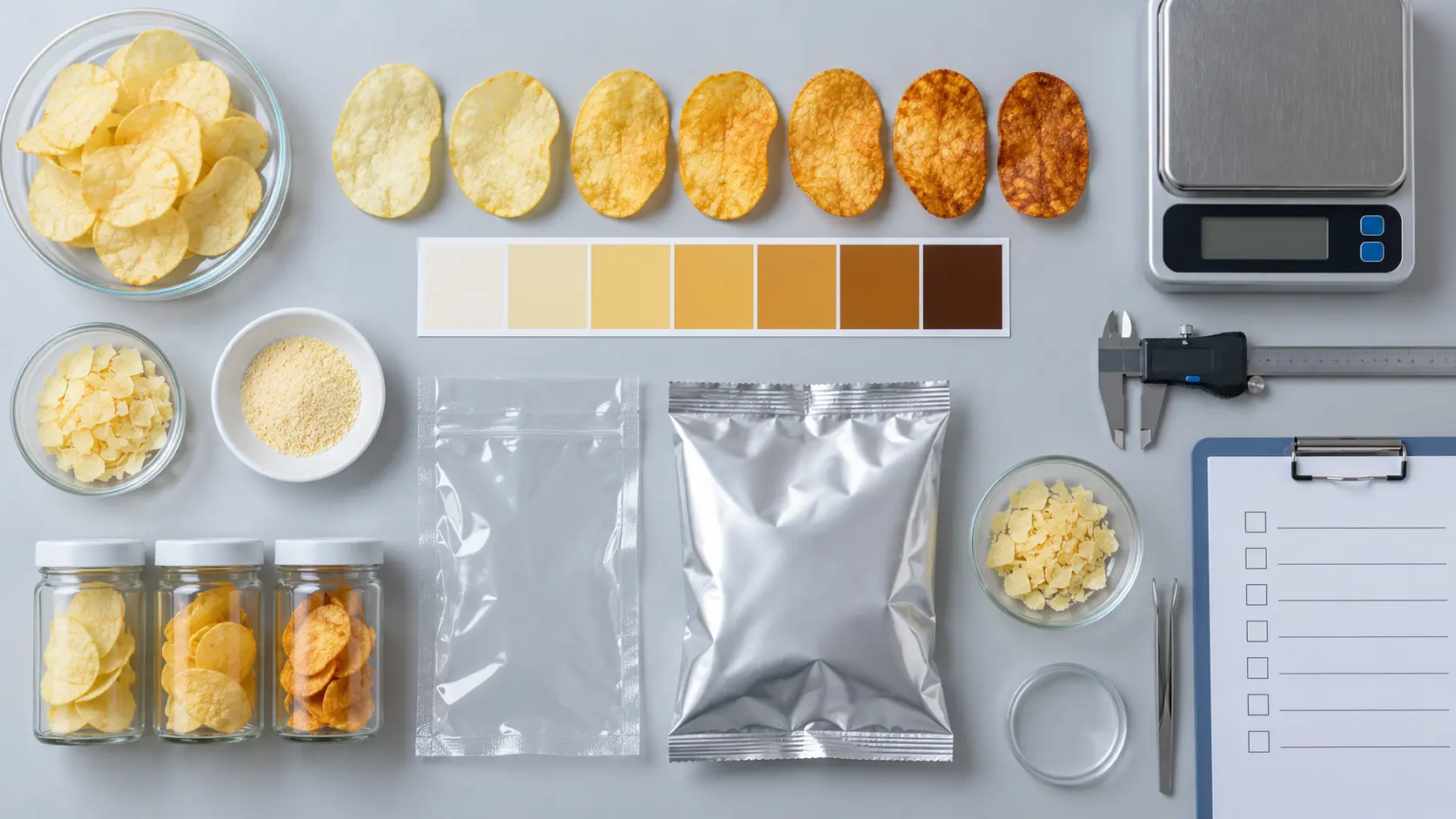
The release plan can cover appearance and colour, piece-size distribution, broken pieces, moisture or water activity where meaningful, salt or seasoning coverage, sensory result, oil-quality criteria, net weight, seal integrity, coding and retained samples. Name methods, tolerances and who can accept a deviation. A certificate of analysis should report the agreed lot controls; it should not replace the buyer specification.
Connect the lot, pack and distribution route
Regulation (EC) No 178/2002 provides the EU traceability framework. Link potato and oil batches, seasoning lot, fryer run, packaging components, finished cases and retain samples. Keep the finished-lot code and its unit-to-case relationship clear under the EU lot framework in Directive 2011/91/EU.
Test the approved crisp in the proposed pouch and case. Oxygen barrier, headspace or protective gas where used, seal performance, coding, fill, carton strength and vibration, drop and stacking exposure can change oxidation and breakage. Request support for the real food-contact material and intended use under Regulation (EC) No 1935/2004. Packaging review should also account for Regulation (EU) 2025/40, applicable from 12 August 2026, with the relevant transition and market details checked.
Send one comparable RFQ
- Destination, channel, sliced or formed product, cut, appearance, flavours, pack sizes and proposed claims
- Potato, oil and seasoning specifications, recipe, allergen status, origins where relevant and change rules
- Frying, colour and acrylamide mitigation plan with sampling, review and corrective-action responsibilities
- Reference and first-production samples with measurable appearance, breakage, moisture and sensory limits
- Lot-release tests, traceability, retained samples, deviation route and recall contacts
- Pouch, gas or headspace where used, coding, carton and pallet specifications with transport checks
- Quantity, named delivery place, price basis, minimum order, lead time and offer validity
Require bidders to mark every deviation on the same sheet and keep technical acceptance separate from commercial comparison. The comparable export quote guide structures delivery terms and inclusions. Send the completed brief through the Marnivo inquiry form for a case-specific sourcing review.