Define the use case before asking for a price
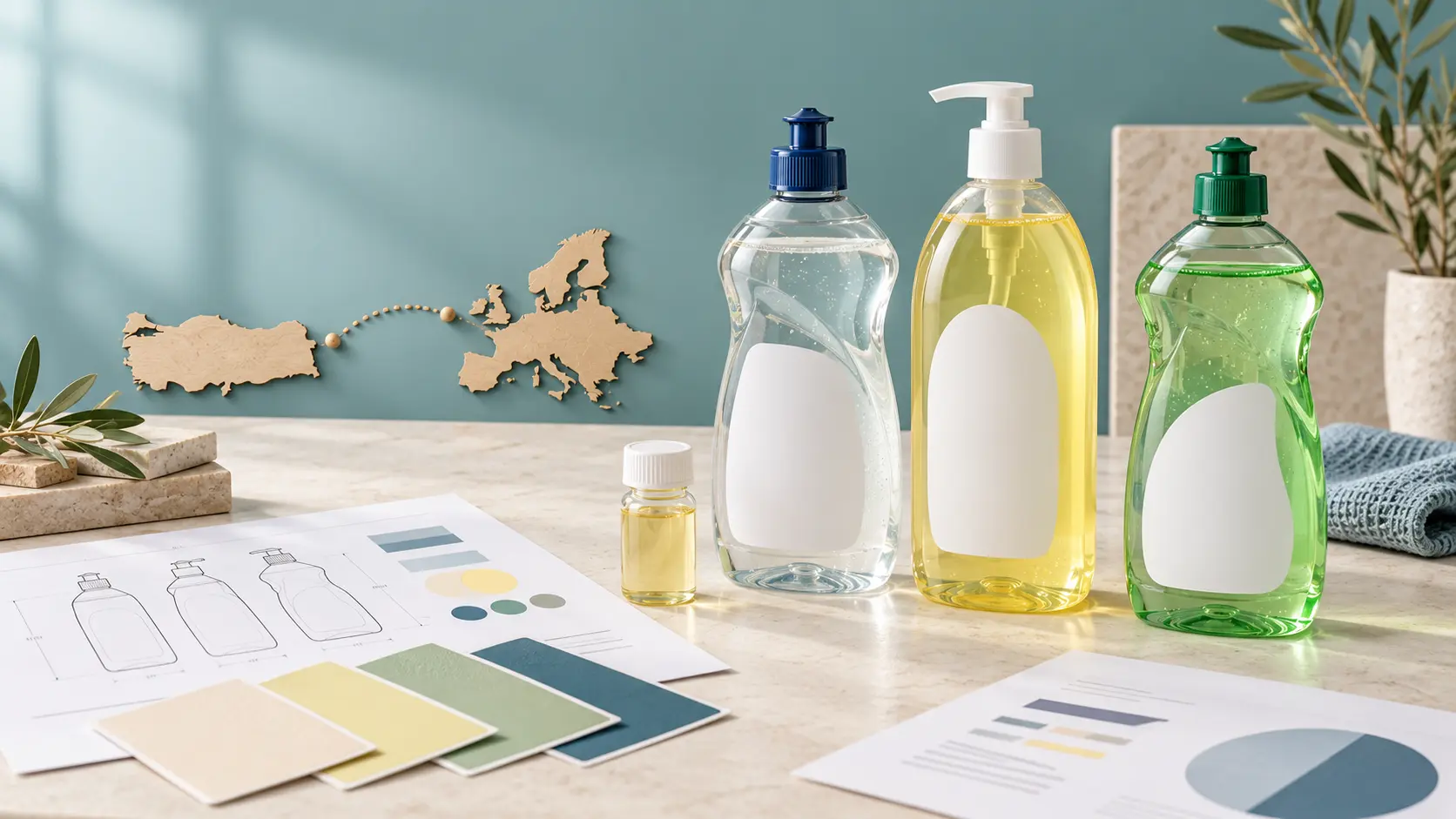
Hand dishwashing liquid is not one interchangeable product. Start with the destination market, consumer or professional channel, intended soil load, water conditions, fragrance position, bottle size and dispensing format. Then nominate a benchmark only to explain expected handling and cleaning behaviour; do not ask a supplier to copy another brand. The cleaning-products buyer page frames the category, while the private-label workflow assigns specification, artwork, sample and change approvals.
Write measurable acceptance points for appearance, odour, colour, pH, viscosity, density, fill quantity and cleaning or foam method. The buyer and manufacturer should agree the test method, conditioning, sample size, tolerance and release authority. A visual match, a marketing phrase such as concentrated, or one successful bench sample does not define repeatable production.
Freeze formula identity and change control
Request the full compositional and regulatory data needed by the responsible EU operator, under confidentiality where appropriate. Record surfactant identities and ranges, solvents, preservatives, fragrance, colorants and any other components relevant to classification or detergent disclosure. Link every raw material to a supplier, grade and change-notification rule. Ask who owns the formula and which substitutions require written approval.
Build a stability plan around the final formula and the actual pack: defined temperatures and times, appearance, odour, pH, viscosity, separation, colour, bottle interaction and closure performance. Agree retained samples and investigation rules for complaints or out-of-specification lots. Claims such as antibacterial, sensitive skin, plant-based or eco-friendly need separate evidence and legal review; a supplier declaration alone should not release them to artwork.
Separate today’s detergent rules from the 2029 change
For an EU launch in 2026, assess the offered product against the current Regulation (EC) No 648/2004 on detergents, including applicable ingredient and packaging disclosures and the required ingredient information for medical personnel and consumers. Keep the label ingredient bands, named preservatives and fragrance-allergen information tied to the final formula, and verify the website ingredient list and destination languages before release.
Regulation (EU) 2026/405 replaces that framework but, apart from specified provisions, applies from 23 September 2029. Treat it as a dated transition project, not as a reason to skip current compliance. Map manufacturer or importer roles, digital product passport data, label changes and record ownership against the exact placing-on-market date.
The final mixture also needs a documented classification under Regulation (EC) No 1272/2008 (CLP). Classification drives any hazard pictograms, signal word, statements and packaging features. If the mixture is classified for health or physical hazards, confirm the responsible EU importer or downstream user, poison-centre notification and UFI before sale; ECHA explains the link in its CLP overview. Do not copy a UFI or safety data sheet from a similar scent or concentration.
Approve the actual formula-pack combination
Specify bottle resin and colour, nominal volume, closure and liner, dispensing orifice, tamper evidence, label material, date or lot code area, case and pallet. Test the filled pack rather than separate components: closure application and removal, inversion leak, drop and compression where appropriate, label adhesion, transport vibration and storage exposure. Record conditioning, sample count, acceptance limits and owner.
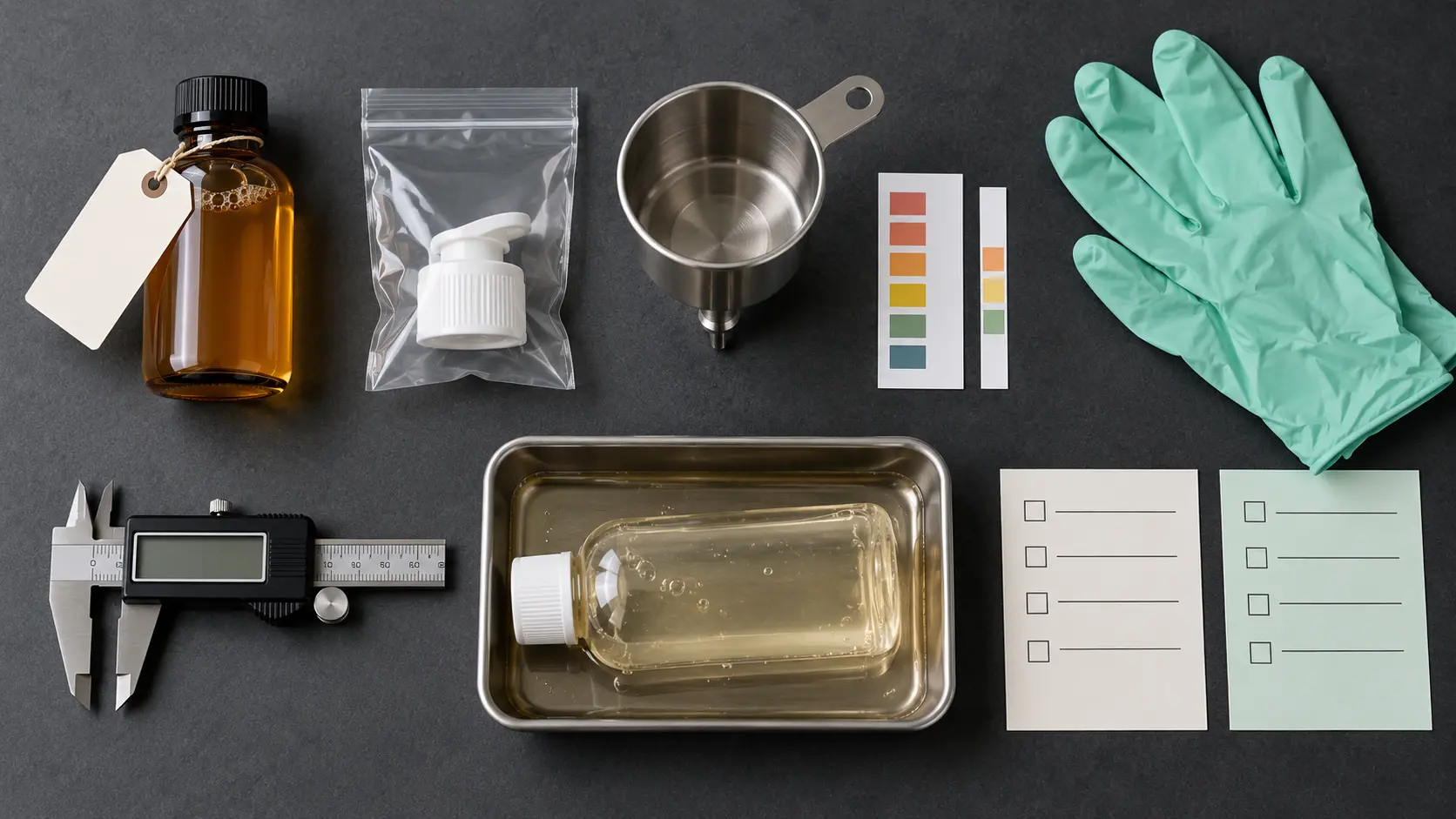
Performance work should also use a written method: defined plates or soil, water volume and hardness, dose, wash sequence, temperature and scoring. It can compare prototypes consistently without turning an internal test into an advertising claim. Keep performance approval, regulatory approval and commercial acceptance as separate gates.
Build destination artwork and the packaging file together
Create artwork only from the approved formula, CLP decision and detergent disclosure file. Check product identifier, responsible supplier details, nominal quantity, use and dose directions, precautions, ingredient wording, UFI where required, batch coding and destination languages. Assign final approval to the operator legally responsible for the target market.
Regulation (EU) 2025/40 on packaging and packaging waste applies from 12 August 2026, with obligations and transitions depending on the pack and operator role. Capture component materials and weights, supplier declarations, recyclability evidence, markings and responsibility allocation for the offered bottle, closure, label and grouped pack. A recyclable claim or bottle photograph is not a complete compliance file.
Send one comparable RFQ
- Destination, channel, intended use, benchmark purpose and prohibited claims
- Formula version, component identities and ranges, fragrance and preservative details, and change control
- Product limits, test methods, stability protocol, retained samples and lot-release authority
- Current detergent disclosure file, 2029 transition owner, CLP decision, SDS and PCN/UFI status where applicable
- Bottle, closure, label, case and pallet drawings plus filled-pack test protocol
- Destination artwork, languages, PPWR data and approval responsibility
- Quantity, named delivery place, price basis, minimum order, lead time and offer validity
Ask every bidder to mark deviations on the same sheet and keep technical approval separate from commercial terms. The comparable export quote guide structures inclusions and delivery terms. Submit the brief through the Marnivo inquiry form for a case-specific sourcing review.