Define the beverage before comparing offers
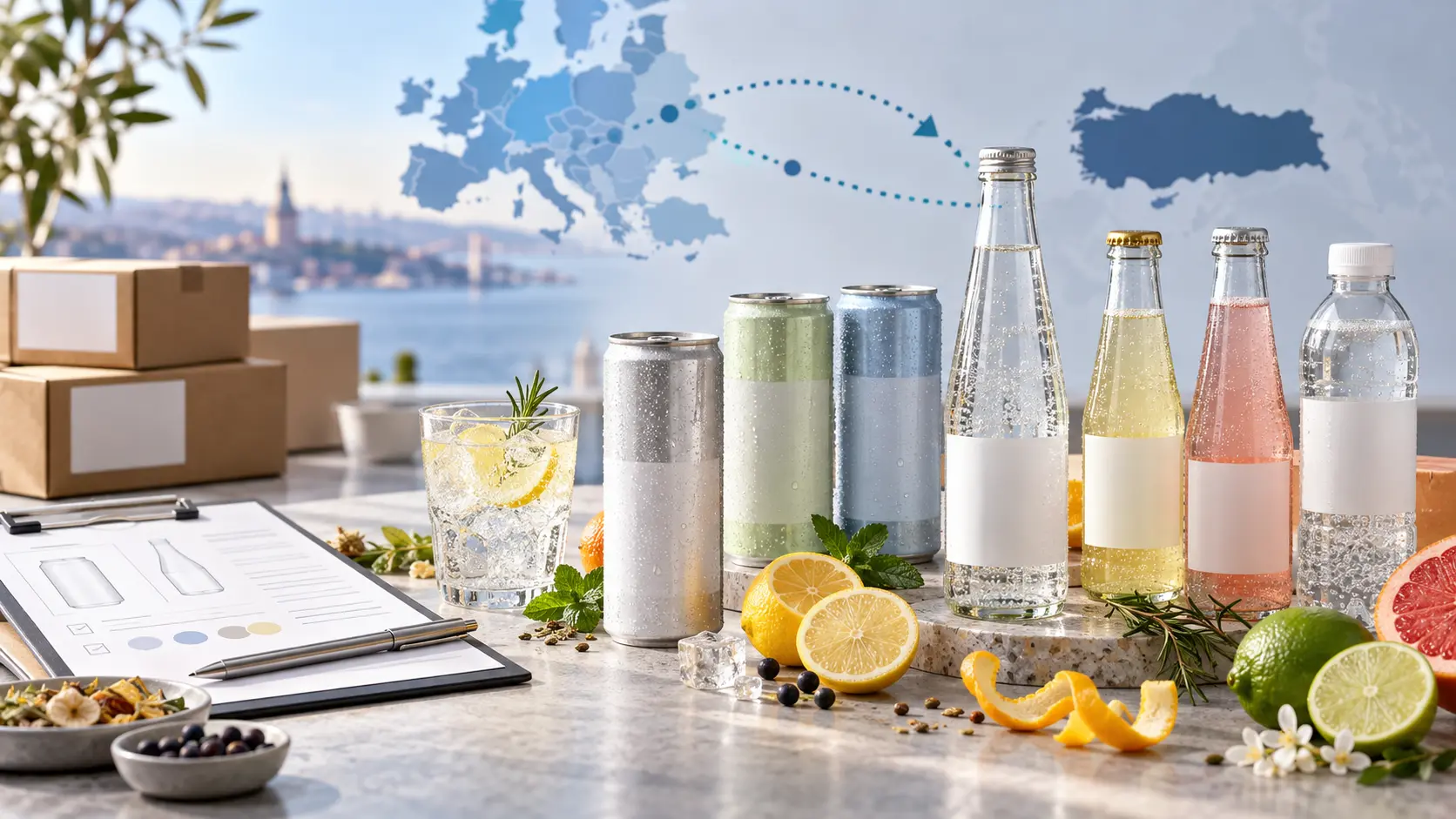
Start with the intended product, market and channel: a flavoured carbonated soft drink, a sugar-sweetened or sweetener-based recipe, a caffeine-containing variant, or another clearly defined beverage. Record flavour direction, colour, target sweetness and acidity, serving format and whether any fruit, nutrition or health statement is proposed. Do not let a working name such as “sparkling fruit drink” imply a fruit content or legal category that the approved formula does not support.
Ask each bidder to return one controlled recipe sheet that names every ingredient, processing aid and additive, their function, supplier specification and change-notification rule. The beverages buyer page shows the wider category, while the private-label workflow helps assign ownership for formula, artwork, samples and revisions.
Check the exact recipe against the destination rules
EU food-additive permissions depend on the food category, substance and conditions of use. Flavoured carbonated drinks generally sit within category 14.1.4 in the guidance supporting Regulation (EC) No 1333/2008, but the responsible operator must confirm the exact product classification and the current Union list before formula lock. Use the Commission's food-safety databases to check authorised additives and conditions rather than copying a recipe approved for another drink or market.
Build a pilot specification with measurable targets for soluble solids where relevant, acidity or pH, colour, flavour profile, sweetener system, preservative system and carbonation. Name the agreed methods and tolerances instead of using “standard quality”. Review interactions between acid, sweetener, flavour, colour and packaging during shelf-life work. A bench sample can confirm direction, but it does not by itself establish production consistency or legal suitability.
Turn carbonation and filling into release controls
Define carbonation as a target and tolerance linked to product temperature and the agreed test method. The same drink can give a different pressure reading when temperature, headspace or container format changes. For cans, document seam checks, buckle resistance and leakage controls. For PET or glass, define closure torque, seal performance, panel or bottle deformation, breakage controls where relevant and transport handling.
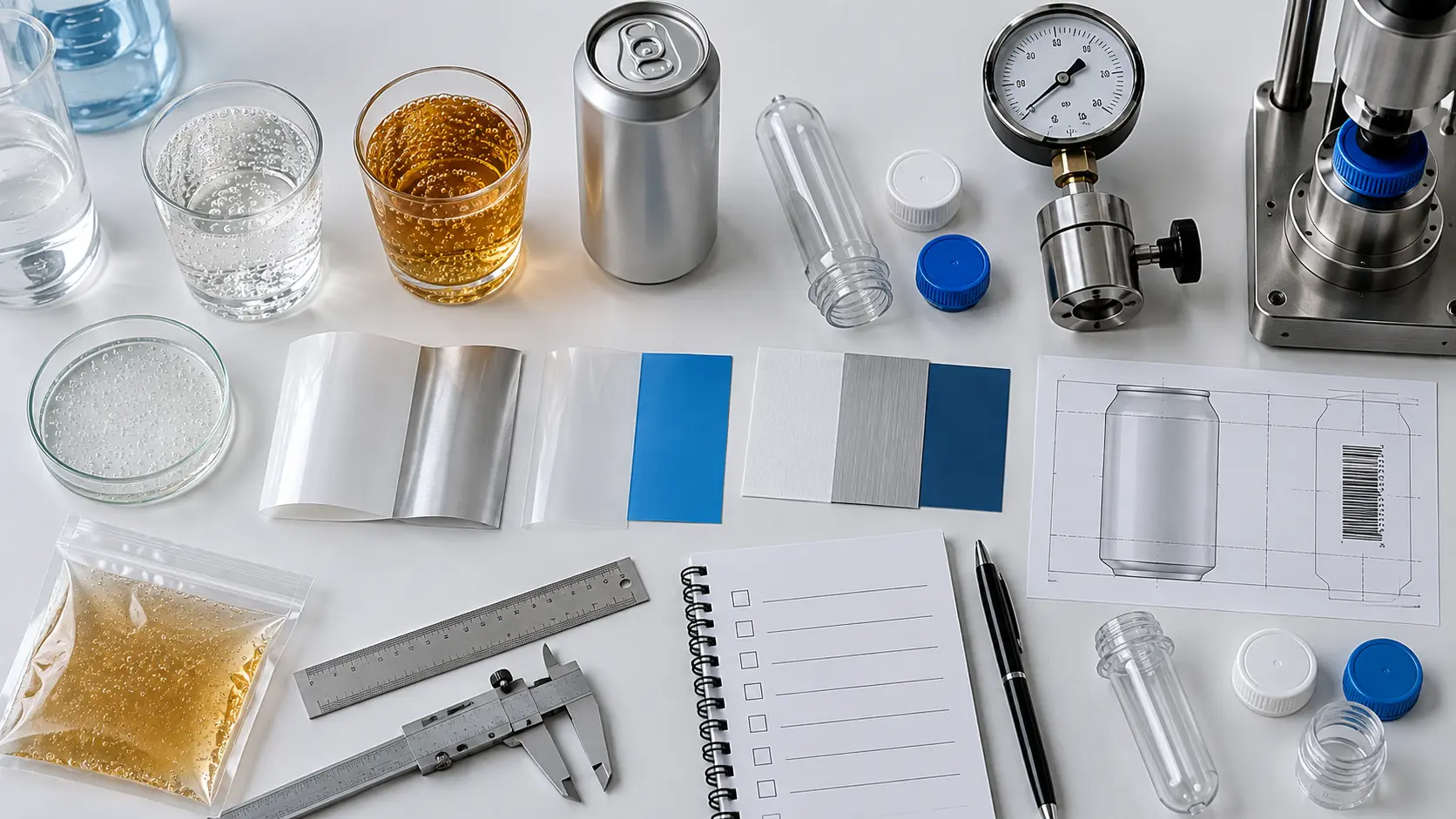
The finished-product release plan should identify the lot, recipe version, fill volume or net quantity control, sensory result, carbonation result, key chemistry, microbiological scope where justified, pack-integrity checks and retained samples. Set who reviews deviations and whether a lot is held, reworked or rejected. Do not describe a generic supplier certificate as proof that every production lot met the buyer's specification.
Connect ingredients, filling and finished lots
Regulation (EC) No 178/2002 establishes food-business responsibilities and traceability. The buyer file should connect water and ingredient intake, flavour and additive batches, syrup preparation, filler run, packaging components and finished cases. Ask how quickly the producer can identify immediate suppliers and customers, isolate affected stock and complete a mock trace.
Keep the lot identifier distinct from date marking and other mandatory food information. Directive 2011/91/EU provides the EU framework for lot identification. Agree the coding model, print location, legibility, case-to-unit relationship and records retained for complaints or withdrawal. Origin statements also require evidence for the actual lot; a company address or shipping route is not origin proof.
Approve label claims and the complete pack
Regulation (EU) No 1169/2011 frames mandatory food information. Confirm the product name, ingredient list, allergens if applicable, net quantity, date marking, storage instructions, responsible operator, nutrition declaration, destination language and lot placement. If sweeteners are used, check the required wording accompanying the food name. For beverages above 150 mg/l caffeine, confirm whether the prescribed high-caffeine statement and caffeine content per 100 ml apply. Review every claim separately under Regulation (EC) No 1924/2006.
Test the actual drink in the proposed can, PET or glass format with its closure, liner, ink, label, tray or case and pallet pattern. Regulation (EC) No 1935/2004 provides the food-contact framework. The buyer should request supporting declarations for the real component combination and define migration or compatibility evidence where applicable. Packaging review should also consider Regulation (EU) 2025/40, which applies from 12 August 2026, while checking product- and market-specific transition details.
Send one comparable RFQ
- Destination, channel, beverage identity, flavour direction and proposed claims
- Controlled recipe, ingredient and additive specifications, functions and change rules
- Sweetness, acidity, colour, sensory and carbonation targets with methods and tolerances
- Pilot, shelf-life and production sample plan plus finished-lot release documents
- Traceability, lot coding, origin support, deviation route and recall contacts
- Can, bottle, closure, label, case and pallet specifications with compatibility checks
- Quantity, named delivery place, price basis, minimum order, lead time and offer validity
Require bidders to mark deviations on the same sheet and keep technical approval separate from commercial comparison. The comparable export quote guide structures delivery terms and inclusions. Send the completed brief through the Marnivo inquiry form for a case-specific sourcing review.