Start with the prepared broth, not the cube alone
A bouillon offer becomes comparable only after the buyer defines how the finished broth will be used. State whether the cube is intended for direct drinking, home cooking, foodservice or as a recipe component; name the target flavour profile; and specify the destination countries, pack format, languages and serving instruction. Chicken-style, beef-style and vegetable products are not interchangeable descriptions: the recipe, ingredient naming, allergen review and consumer expectation can all differ.
Write the brief around one preparation method. Record cube mass, water volume and temperature, stirring method, standing time and the point at which the sample is judged. This prevents a concentrated sample from appearing stronger merely because it was prepared with less water. Use the grocery staples buyer page to frame the category and the private-label workflow to assign formula, artwork and approval ownership.
Lock recipe identity before discussing price
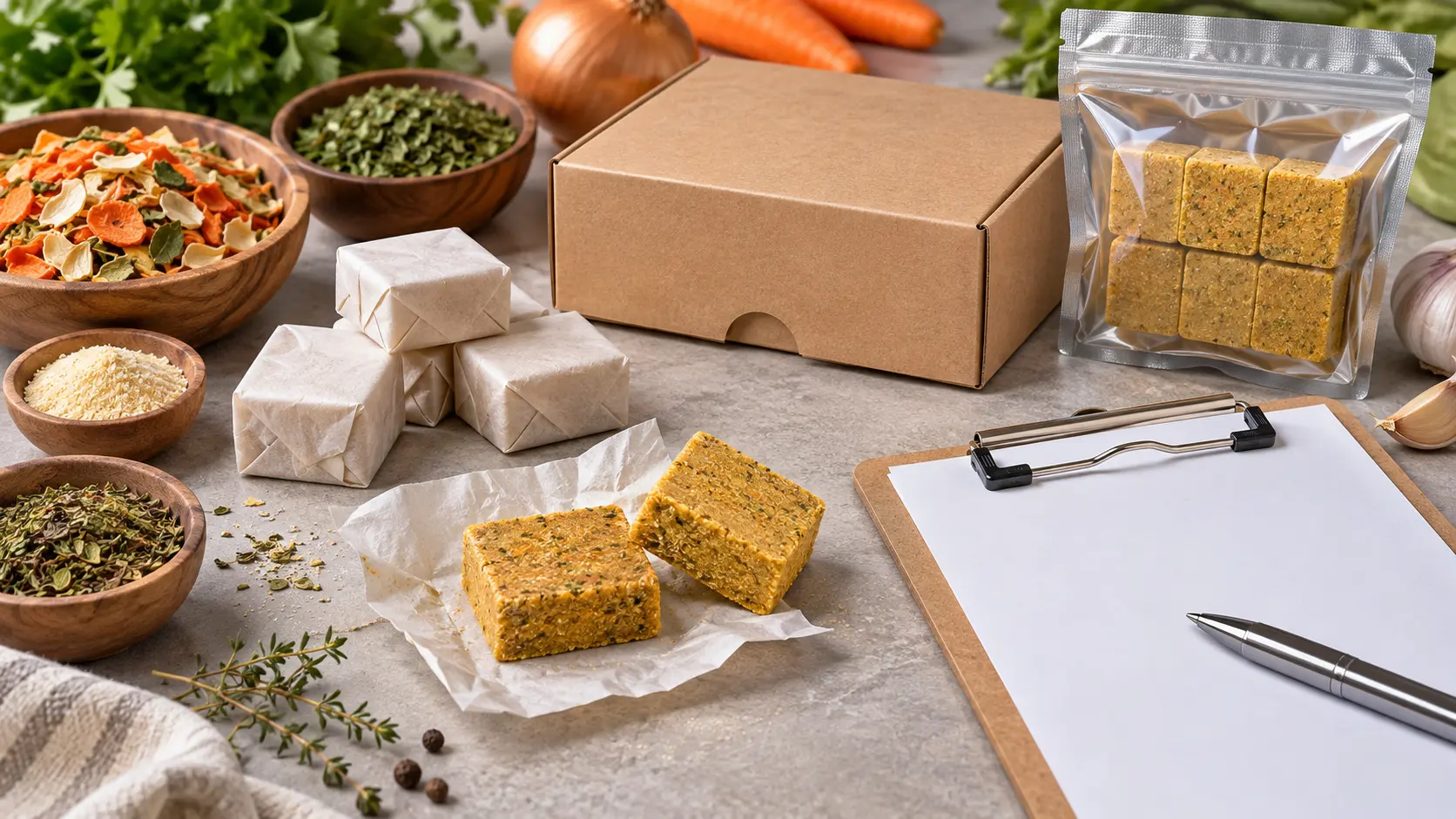
Request the full proposed ingredient list in descending order, the recipe code and revision, compound-ingredient breakdowns where required, and specifications for salt, fats, starches, vegetable powders, herbs, spices, yeast extracts, flavourings and additives. Ask which inputs may change by supplier or season. A label draft, a familiar flavour name or a sample cube does not by itself establish the controlled commercial recipe.
Define measurable attributes that matter to the use case: cube mass and dimensions, salt and moisture targets, fat system, hardness or friability, colour, aroma, visible particulates and the absence of unintended foreign material. Separate variants such as palm-free, yeast-extract-free, vegan-positioned or reduced-salt recipes because each may require a different formula, evidence set, sensory target and price comparison. Require written change notice before any substitution that could alter the declaration, allergen status, flavour or shelf-life case.
Compare performance in a repeatable sample test
Evaluate every coded sample under the same preparation conditions. A practical scorecard can cover release from the wrapper, crumbling, dissolution time, floating particles, oil ring, colour, aroma, salt perception, flavour balance, aftertaste and sediment. Review the broth soon after preparation and again after a defined hold period, because separation and flavour persistence may change. If the cube will be used in cooking, add the intended recipe test rather than relying only on a cup tasting.
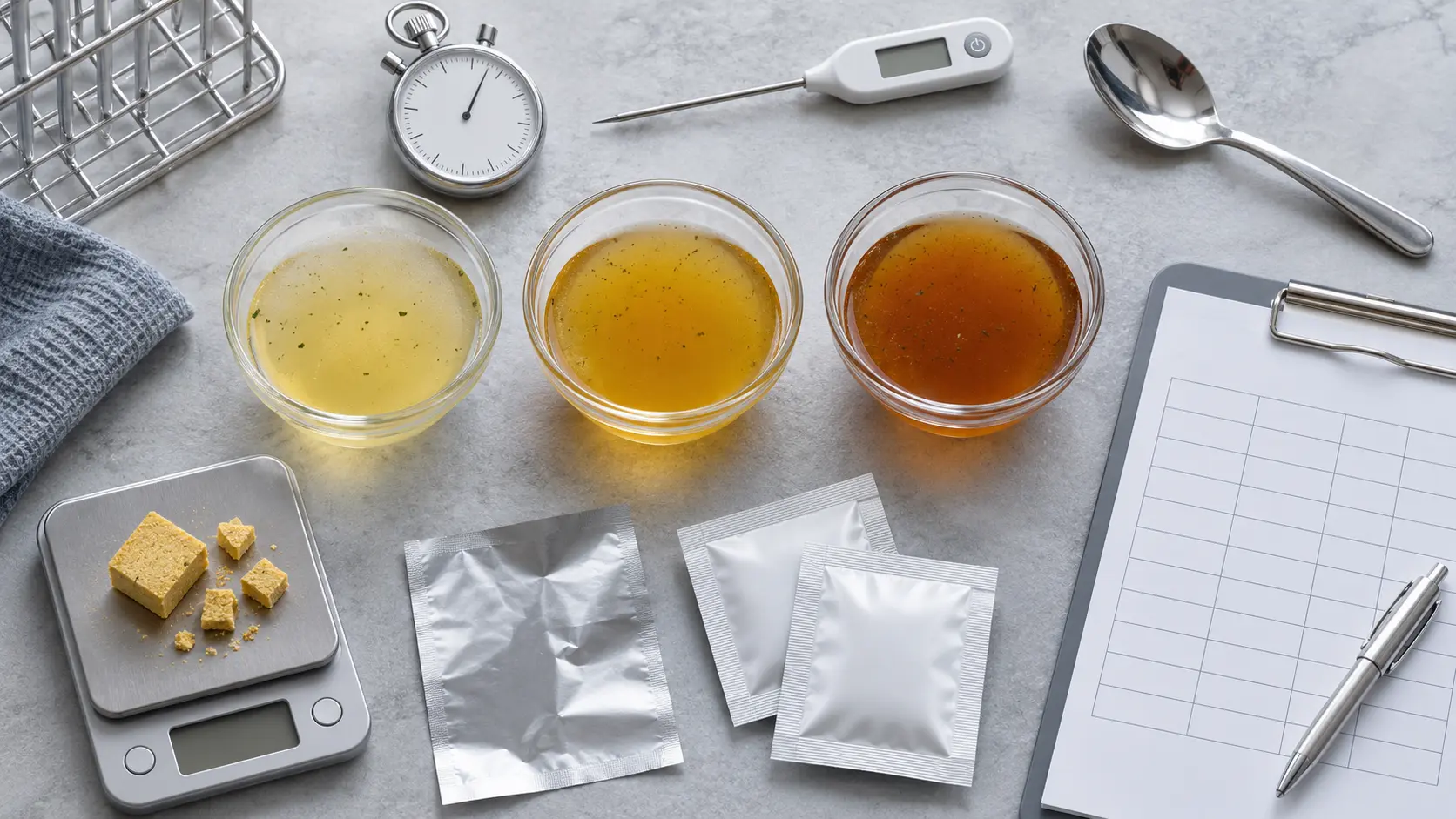
Agree acceptance ranges and who signs the reference sample. Keep the approved sample, its recipe revision, wrapper construction and test sheet linked to the purchase specification. Shelf-life evidence should use the actual recipe and proposed pack, with checkpoints suitable for moisture pickup, fat oxidation, aroma loss, cube integrity and sensory change. A result from another flavour or wrapper is useful background, not automatic proof for the offered item.
Map the formula to the destination label
For EU sale, review the final name, ingredient list, emphasised allergens, net quantity, date marking, storage and use instructions, responsible food business operator details, nutrition declaration and destination-language presentation against the current food-information rules. Compound ingredients and ingredients that trigger allergy or intolerance declarations need particular attention. Do not assume that a Turkish label can simply be translated without checking the final recipe and the market-facing name.
Verify each additive and its conditions of use for the applicable soups-and-broths category in the current EU rules and Commission database. Review flavouring descriptions against the flavourings regulation rather than treating every supplier trade name as label wording. Any nutrition or health positioning needs a separate claims check and supporting calculation or evidence; a technical specification should not promise a claim that the final product and serving basis cannot support.
Protect the cube through the distribution route
Bouillon cubes can lose aroma, absorb moisture, stain wrappers or deform if the fat system and pack barrier are mismatched. Specify the immediate wrap, seal or fold, secondary carton or pouch, count, coding position and case configuration. Request food-contact suitability documentation for the proposed materials and assess barrier, seal integrity, migration responsibilities and print-to-food set-off risk for the real construction.
Run pack trials with the intended cube and distribution conditions. Check wrapper release, grease resistance, pinholes, seal quality where applicable, odour transfer, scuffing, code legibility, carton closure and cube damage after handling. Agree finished-batch checks, retained samples and traceability from ingredient and packaging lots to the dispatched batch. Traceability is an operating system and record trail, not a logo on a document.
Send one matrix that separates technical acceptance from price
- Destination, channel, flavour profile, use case, preparation method and serving instruction
- Recipe code, complete declaration, compound ingredients, allergens, permitted substitutions and change control
- Cube mass, dimensions, salt, moisture, fat system, hardness, colour, aroma and particulate criteria
- Coded sample plan, broth scorecard, cooking test, reference sample and acceptance ranges
- EU label responsibilities, additive and flavouring review, nutrition basis and any proposed claims
- Wrapper and secondary pack construction, food-contact file, shelf-life plan, traceability and release checks
- Quantity, named delivery place, price basis, minimum order, lead time, validity and exclusions
Ask bidders to complete the same matrix and price only the recipe and pack version that passed the technical gate. Use the comparable export quote guide to align delivery terms and inclusions, then send the controlled brief through the Marnivo inquiry form for a case-specific sourcing discussion.