Define the tea before requesting prices
Begin with the product the buyer will place on the market, not a generic request for black tea. State whether the pack contains only black tea from Camellia sinensis, a named blend, flavoured tea or another composition. Record intended market, channel, pack format, target cup profile and proposed claims separately. Origin of the leaf, place of blending and place of packing are different facts; a supplier address or product name does not prove them.
Ask each bidder to complete one controlled product sheet covering leaf origin and harvest information where relevant, blend code, grade or particle-size distribution, permitted variation, foreign-matter controls, storage, shelf-life basis and change notification. The grocery staples buyer page places the item in the wider range, while the private-label workflow assigns responsibility for formula, artwork, samples and approvals.
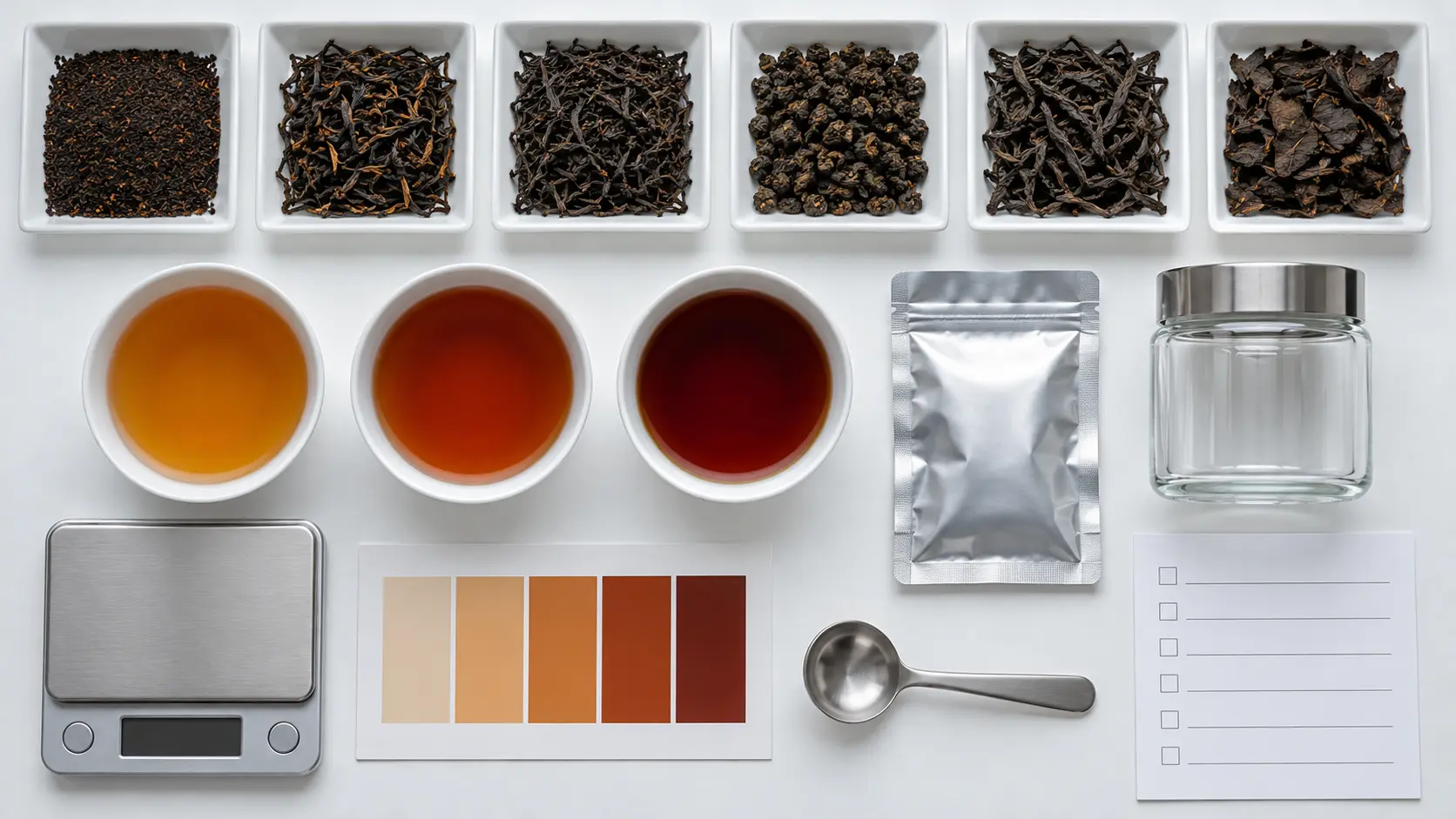
Turn leaf appearance and cup profile into a specification
Commercial names such as broken leaf, fannings or dust are not enough on their own. Define the actual sieve or particle profile used by the supplier, the permitted proportion of stems or fine material, dry-leaf colour and aroma, and any agreed moisture or water-activity limit with its method. For tea bags, connect cut size to dosing, infusion performance and dust control. For loose leaf, connect grade to the intended brewing method and consumer presentation.
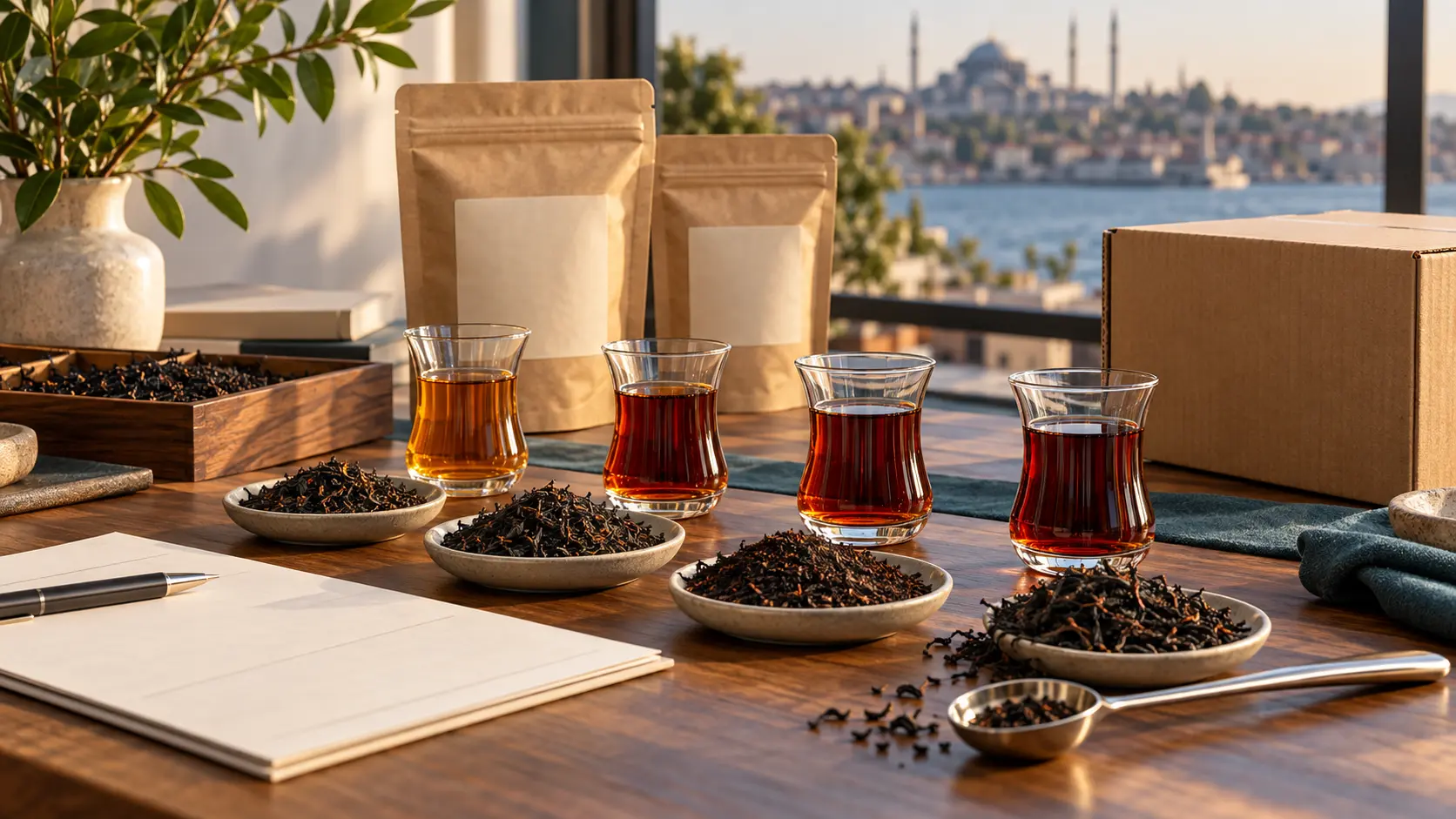
Use one repeatable evaluation protocol for all samples: water source, tea mass, water volume, temperature, infusion time, vessel and scoring sequence. Record dry-leaf appearance, infused-leaf appearance, liquor colour, aroma, flavour, astringency and aftertaste. Keep a sealed reference sample after approval and define how long it remains valid. A tasting result supports product selection; it does not replace analytical controls, label review or confirmation of the production lot.
Build a risk-based residue and contaminant plan
Pesticide acceptance must use the exact tea product and current legal limit. Regulation (EC) No 396/2005 provides the EU maximum-residue framework, and the Commission's EU Pesticides Database can help identify current entries. Confirm the controlling legal text when approving a specification. Ask the responsible operator to justify the analytical scope from origin, supplier history, current alerts and product risk instead of treating one generic certificate as permanent coverage.
The current consolidated Regulation (EU) 2023/915 sets a 150 µg/kg maximum level for pyrrolizidine alkaloids in tea and flavoured tea made from Camellia sinensis as a dried product, subject to its definitions and calculation rules. Put the applicable contaminant scope, sampling point, laboratory method, reporting limit, review responsibility and response to a non-conforming result into the lot-release plan. Do not convert a compliant result into a broad safety or health claim.
Approve the label and the real pack together
Regulation (EU) No 1169/2011 governs mandatory food information and how it is presented. Review the legal name, ingredients where required, allergens if introduced by flavourings or other ingredients, net quantity, date marking, storage, responsible operator, instructions and destination language on the actual artwork. Plain tea may fall within the nutrition-declaration exemption in Annex V, but the final formula and presentation must be checked before relying on that exemption.
Tea quality can change through moisture, oxygen, odour transfer, light and damaged seals. Specify the proposed pouch, tea-bag envelope, inner liner, carton and case, then request evidence for the real food-contact construction and intended use under Regulation (EC) No 1935/2004. Run seal, fill, coding, compression and transport checks on the approved format. Packaging review should also account for Regulation (EU) 2025/40, applicable from 12 August 2026, with relevant transitions and market details verified.
Connect the reference sample to the released lot
Use three sample stages: initial selection samples, a sealed reference after blend and pack approval, and a first-production sample from the intended line. Record supplier, blend code, sample or lot code, packing date, storage history, brew protocol and acceptance notes. Agree which measurable and sensory differences trigger investigation, rejection or a documented concession rather than relying on memory.
Regulation (EC) No 178/2002 requires traceability through production, processing and distribution. Link incoming tea lots, blending records, flavouring lots where used, packaging components, finished cases, test results and retained samples. Keep the finished-lot indication clear under Directive 2011/91/EU, and define who can retrieve the records and coordinate a withdrawal or recall.
Send one comparable black-tea RFQ
- Destination, channel, black tea or flavoured tea identity, leaf origin statement, blend and proposed claims
- Grade or particle profile, stem and fine-material tolerances, moisture control, storage and change rules
- Standard brew protocol, target liquor and sensory profile, reference sample and acceptance process
- Pesticide and contaminant plan with sampling point, method, reporting limit, review and corrective action
- Label language, legal name, ingredients and allergens where relevant, date marking and responsible operator
- Tea bag or loose-leaf format, primary material, barrier, seal, coding, carton and transport checks
- Quantity, named delivery place, price basis, minimum order, lead time, validity and marked deviations
Require every bidder to answer on the same sheet and separate technical acceptance from commercial comparison. Use the comparable export quote guide for delivery terms and inclusions. Send the completed brief through the Marnivo inquiry form for a case-specific sourcing review.