Define the product before asking for a price
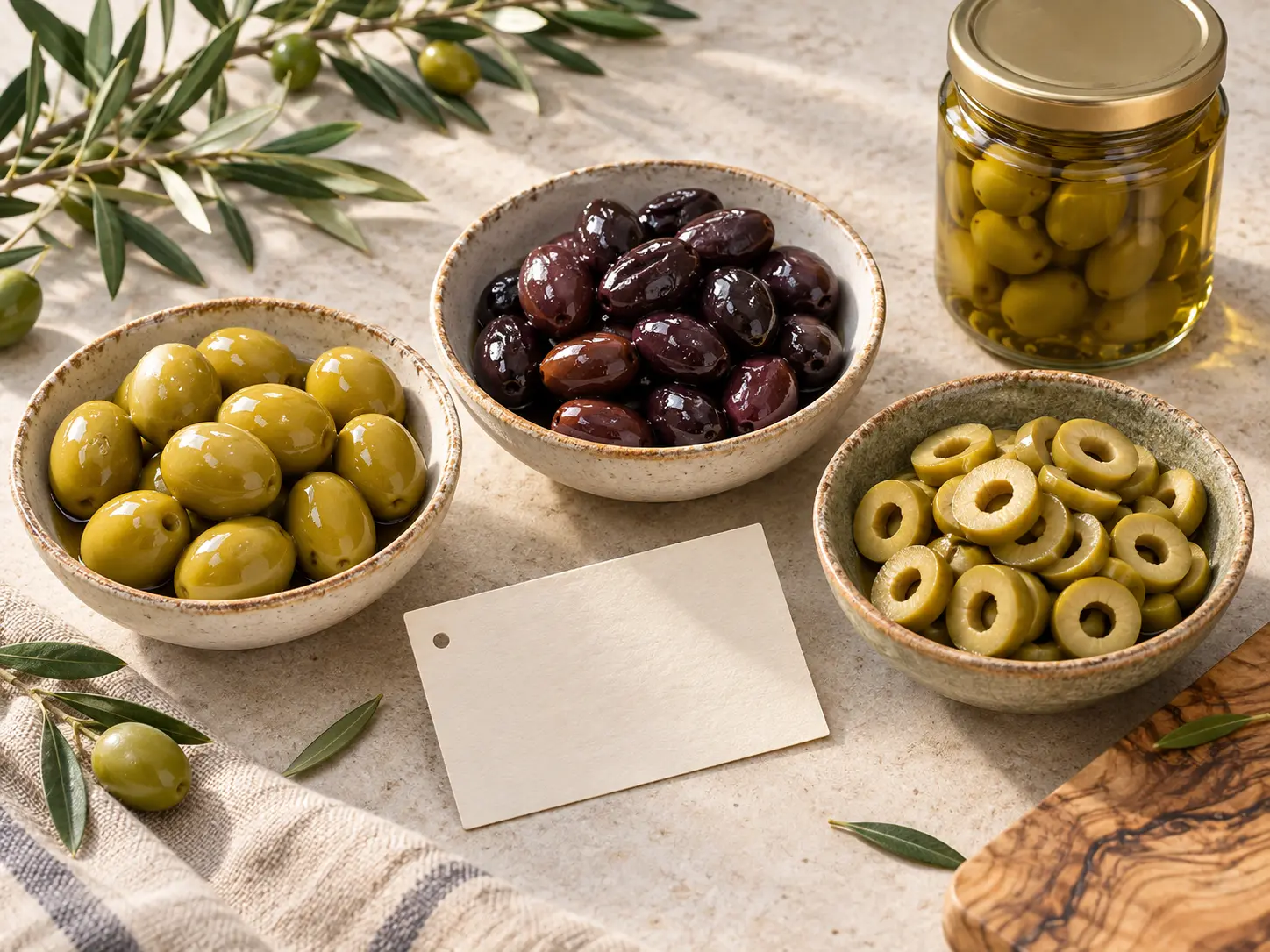
“Table olives” can describe very different shelf propositions. State whether the line is whole, pitted, sliced or stuffed; the preferred colour and presentation; and whether it is for retail, foodservice or further processing. Ask a supplier to identify the olive variety, processing style and packing medium in its own specification. The Codex Standard for Table Olives (CXS 66-1981) offers a common vocabulary for styles, quality and presentation, but your destination market and contract still determine the actual acceptance criteria. If you compare a drained-weight jar with a bulk container by headline price alone, you are comparing different goods. Begin with one reference sample and one written brief.
Make the sample measurable
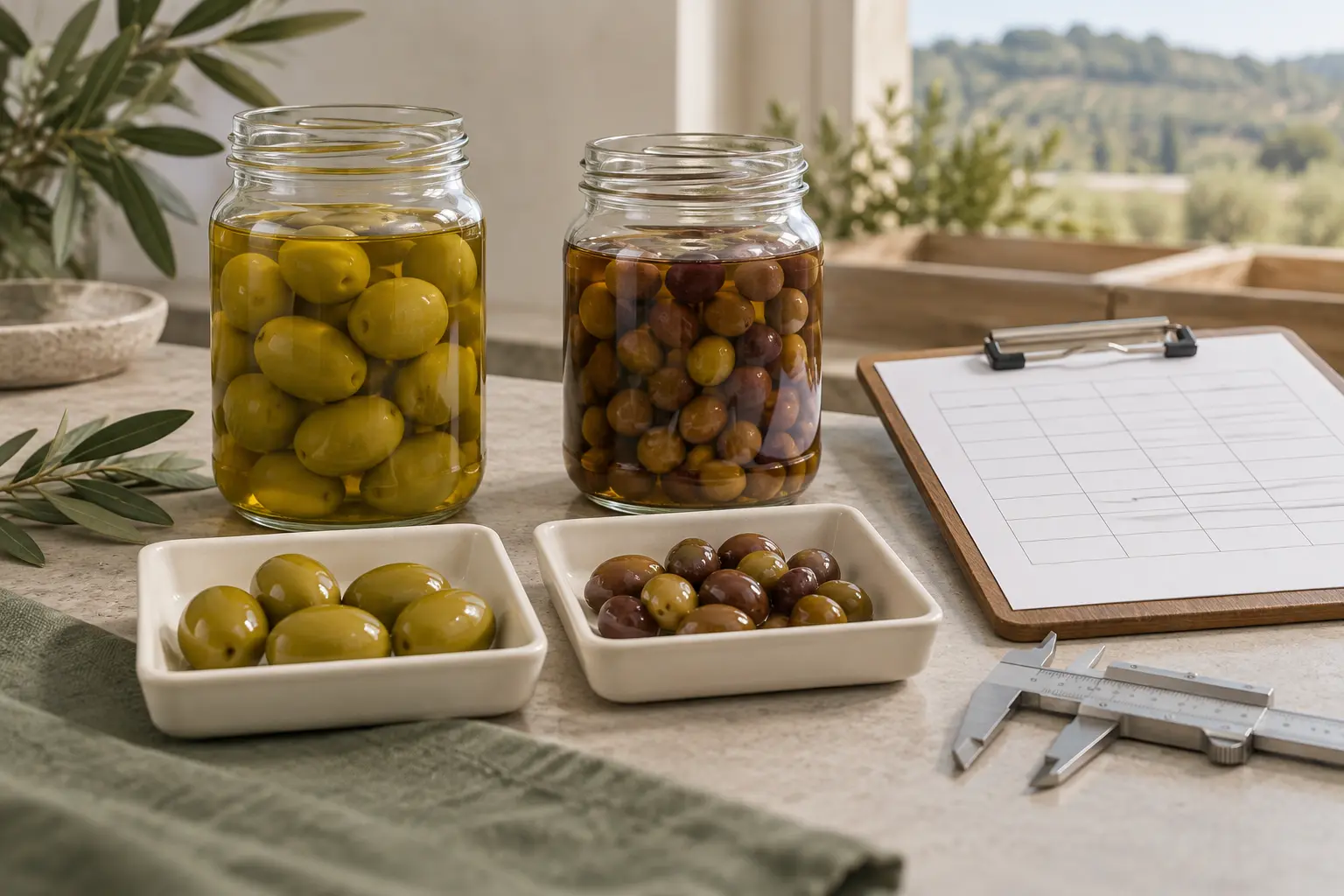
Request a representative sample tied to a specification version and intended production lot or range. Record size or count grade, firmness, colour range, proportion of broken or defective fruit, pit fragments where relevant, and sensory expectations. Agree how each attribute will be assessed and what happens when a sample differs from a commercial batch. For olives in brine, ask for the declared net weight and drained weight, ingredients, salt and acidity information, packing liquid, preservation method and shelf-life evidence appropriate to the proposed pack. A buyer can ask for a laboratory report or product data sheet without assuming every supplier holds the same certification. Keep acceptance limits in the purchase specification, rather than relying on an attractive photograph or an unqualified “premium” label.
Separate pack, label and market checks
A glass jar, pouch, tin and foodservice tub change case dimensions, shipping weight, unit economics and label space. Specify consumer-unit size, units per case, pallet configuration, barcode responsibility and the artwork approval process. For an EU retail destination, the European Commission’s mandatory food information guidance explains particulars such as the food name, ingredients, allergens where applicable, net quantity, durability date, operator details and nutrition declaration. Language and any additional national requirements need checking for the exact destination and sales channel. Ask for a flat label proof and a photograph of the marked pack before sign-off. Do not treat a mock-up as evidence of regulatory approval.
Compare quotes on the same basis
Send one brief to each potential supplier and request an itemised response: product and pack specification, unit and case price, currency, minimum order for that configuration, production lead time, validity period, delivery term and named place, payment milestones, and documents offered. Ask which items are confirmed and which remain estimates. A private-label run may involve separate artwork, plate or packaging costs; request those explicitly rather than assuming they are included. For a practical comparison method, use our export quote request guide and private-label brief. Availability and minimum quantities are supplier- and format-specific and must be reconfirmed when ordering.
Plan the import and the first delivery
The buyer and supplier should agree who handles export papers, transport, insurance, customs clearance and delivery appointments under the selected delivery term. Check the tariff classification and destination-specific procedures in the European Commission’s Access2Markets assistant where relevant; do not infer a duty rate from a generic product name. Before a first shipment, match the commercial invoice, packing list, product specification, labels and traceability identifiers to the approved order. Arrange an inspection or sampling plan if your buying process requires it. A small pilot order can test the actual consumer pack, handling and replenishment plan before a broader assortment commitment.
A usable request to send
Example: “We seek whole green table olives in a retail glass jar for [country/channel]. Please quote [target unit size] and [estimated annual volume], with net and drained weights, variety and style, ingredient and brine details, case and pallet configuration, shelf-life basis, label language options, sample availability, minimum order for this exact format, lead time, delivery term and required documents. Mark unconfirmed items clearly.” This is a request template, not a promise of supply. Once replies arrive, compare like for like and ask follow-up questions on any missing data. Our olive oil offer guide covers a different product and illustrates why specifications should stay product-specific.