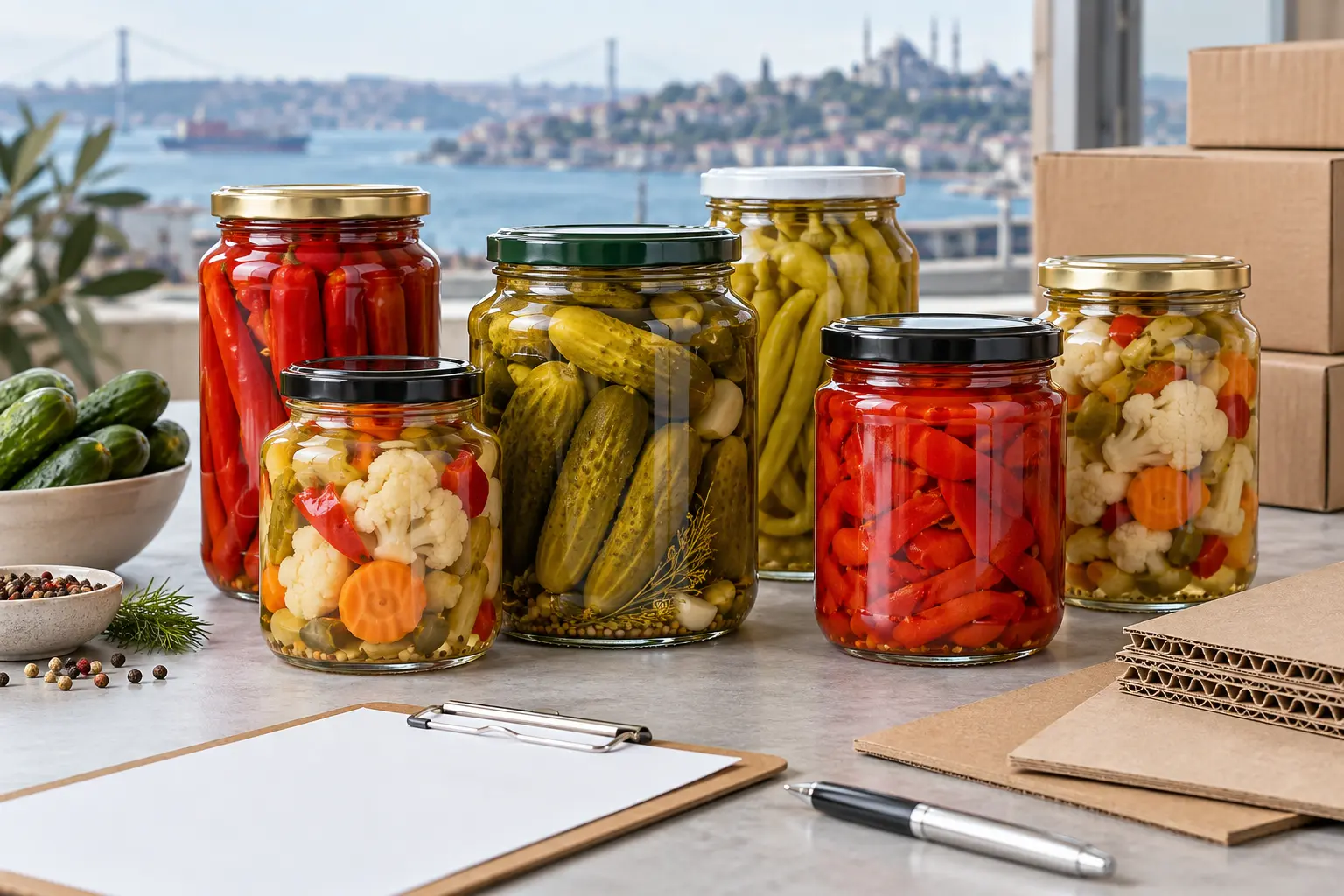
Pickled cucumbers, peppers and mixed vegetables can look similar in a catalogue while differing materially in vegetable size, cut, brine, drained quantity, heat treatment and pack configuration. A buyer who compares only jar size and carton price can therefore compare unlike products. The practical solution is one dated specification per SKU, tied to the sample, artwork and commercial offer. This guide structures that file; it does not imply that any product is in stock, certified or authorised for a destination market.
Define the exact product and channel
Start with the sales channel and intended use: retail, food service, wholesale or further processing. Name the vegetable and style precisely—for example whole cucumber, sliced pepper or mixed vegetables—and state the expected size range, cut, colour, texture, flavour direction and permitted recipe alternatives. Add the destination country, consumer or food-service pack size, closure preference, units per carton and brand route. Our sauces and preserves buyer page is a useful category starting point.
Separate mandatory requirements from preferences. “Whole cucumbers within the agreed size band, glass jar, destination-language label required; cap colour flexible” is more useful than “premium pickles.” If a supplier proposes a different size, recipe or pack, request a separate offer line. Do not let an alternative silently replace the requested SKU.
Build one measurable SKU specification
Request a dated specification with the supplier’s product code, vegetable variety or commercial type where relevant, cut and size method, ingredients, brine or covering liquid description, net quantity, drained quantity where applicable, storage conditions, unopened shelf life and preparation or serving notes. Agree measurable defect and sensory criteria rather than relying on broad quality adjectives.
The Codex Standard for Pickled Cucumbers (CXS 115-1981) provides shared reference terms for styles, ingredients, quality factors, fill and drained weight. It is a comparison aid, not proof that a proposed SKU complies with the destination law or the buyer’s contract. Ask the supplier to identify which values and methods apply to the exact production article and lot.
Connect samples and documents to production
Give every sample a reference and record the matching recipe, jar, closure, label draft and date. Ask which features may change before production and who must approve them. A photograph or catalogue page cannot substitute for the current specification and sample approval. When requesting analysis, hygiene, origin or certification evidence, link it to the exact product and manufacturing site instead of treating a company-level document as universal.
Discuss process controls and test scope with qualified parties for the specific product and destination. The Codex codes of practice include general food hygiene and processed-fruit-and-vegetable references that can improve the buyer’s question set. They do not replace the producer’s validated process, official controls or market-specific legal review.
Compare the complete pack system
Specify the primary pack, closure, seal or tamper feature, contact layers, nominal net and drained quantities, label area and coding position. Then define secondary and transport packaging: jars per tray or carton, dividers, carton dimensions and gross weight, pallet pattern, stacking limits and handling conditions. Ask whether the sample uses the same jar, cap, seal and product-contact materials proposed for production.
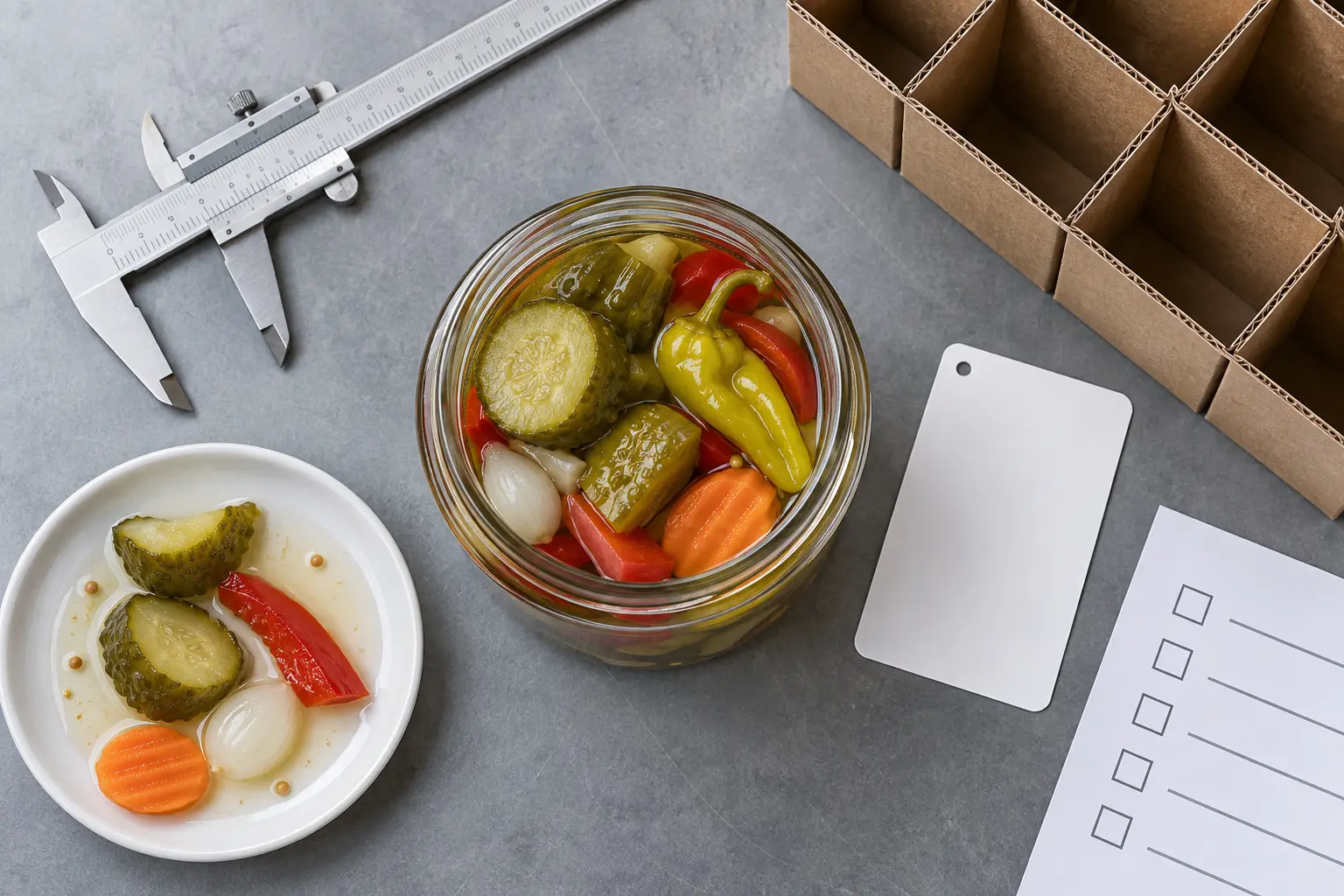
For the EU, Regulation (EC) No 1935/2004 is the framework reference for materials intended to contact food. Request the declarations or supporting documents required for the actual material and destination. Inspect samples for leakage, vacuum or closure performance, corrosion, glass defects, label adhesion, coding legibility and carton protection under the intended handling conditions.
Approve the destination label
Reconcile final artwork with the approved recipe and specification before printing. Check the legal product name, ingredients, allergens where applicable, net quantity, drained quantity where required, date marking, storage and use instructions, responsible business details, lot coding, nutrition declaration and any claims. For EU retail, the European Commission’s mandatory food information page summarises the principal particulars for prepacked food. The destination market and exact presentation determine the binding requirements.
For private label, assign owners for recipe, translations, barcode, dieline and print proof. Our private label process helps frame those approvals. Keep the approved artwork version with the matching SKU, sample and specification; reopen the review if the recipe, site, pack material or claim changes.
Request and approve a comparable offer
Send all candidates the same SKU table and ask for the product-specific minimum, sample route, lead time, remaining shelf life at dispatch, pack hierarchy, available documents, quotation validity and proposed delivery rule with a named place. Compare price at the same net and drained quantities, units per carton and pallet basis. Our export quote request guide provides a reusable structure.
A concise request could read: “Please quote [vegetable and style] for retail in [country], in a [net quantity] glass jar with [drained quantity if applicable]. State size or cut method, recipe reference, units per carton, pallet pattern, label languages, minimum remaining shelf life at dispatch, product-specific minimum, sample route and named delivery place.” Replace every bracket. EU buyers can use Access2Markets My Trade Assistant to begin product, tariff, origin and requirement checks with the correct commodity code.
Before ordering, confirm that the quote, specification, approved sample, recipe, artwork, jar, closure and master carton all carry the same SKU reference. Record tolerances, change control, lot coding, shelf-life points and open actions. Availability, price, minimum quantity, testing, certification and lead time remain supplier- and SKU-specific confirmations—not assumptions from a category guide.