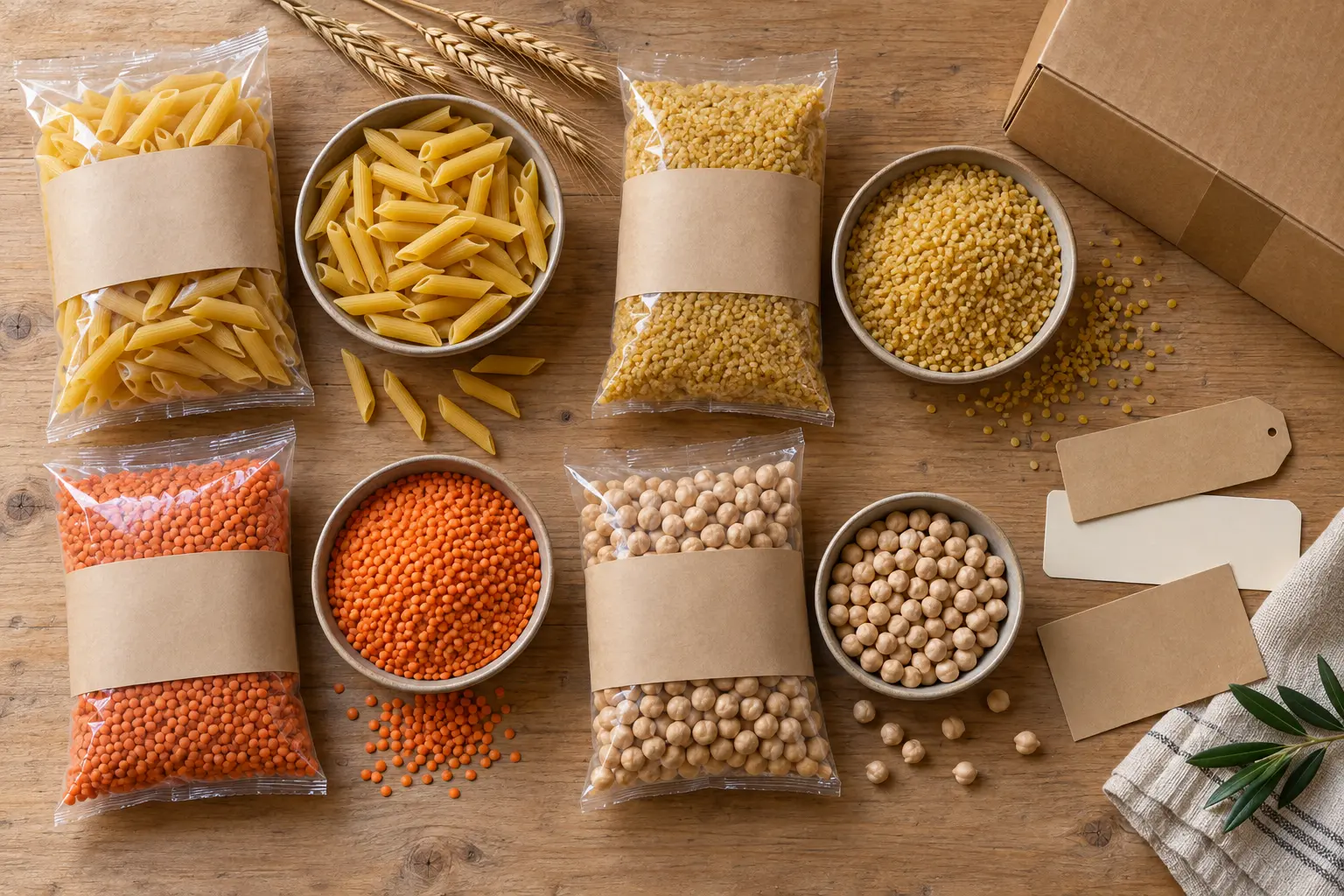
Pasta, bulgur, lentils and chickpeas may share a grocery aisle, but they are not one buying specification. Raw material, product form, cooking performance, pack material and destination label can all change the offer. An importer therefore needs one line per SKU and one common comparison basis. This guide structures that work; it does not imply that any item is in stock, certified or approved for a particular market.
Separate the products before requesting prices
Begin with the sales channel and intended use: retail, food service, wholesale or industrial preparation. Then describe each product precisely. For pasta, record shape, wheat or other raw-material basis, colour, expected cooking behaviour and net weight. For bulgur, state grain size and intended dish or processing use. For lentils, chickpeas and other pulses, name the variety or commercial type, whole or split form, size or grade method, colour and acceptable defect criteria. Our grocery staples buyer page is a useful category starting point.
Keep mandatory features separate from preferences. “Red lentils, 1 kg retail pack, destination-language label required; pack finish flexible” is more actionable than “best quality pulses.” If a supplier proposes an alternative product, ask for a separate line rather than allowing the substitute to replace the requested specification silently. Product photographs help identify the target, but the current specification and approved sample should control the comparison.
Build a specification for each SKU
Request a dated specification carrying the supplier’s product code, ingredient declaration, relevant physical or analytical criteria, storage conditions, unopened shelf life, preparation instructions where needed and pack hierarchy. Ask how sampling and test results relate to the production lot. Any claim about origin, organic status, allergen control, production method or certification needs evidence for the exact product and production site; a company profile or general catalogue is not enough.
For wheat pasta and bulgur, confirm how wheat and gluten are declared for the destination market and whether other allergen statements are relevant to the proposed facility and recipe. The European Commission’s food information overview explains the EU framework for highlighted allergens and other food information. For cereals and pulses, discuss which contaminant, residue, microbiological or quality checks apply to the actual commodity and destination. The Codex standards list, including the General Standard for Contaminants and Toxins in Food and Feed, can support the question set, but destination law and product-specific evidence remain decisive.
Compare the full pack and shelf-life plan
Describe the consumer or food-service pack, closure or seal, barrier needs, net content, units per carton, carton dimensions and gross weight, pallet pattern and storage limits. Dry foods can be affected by moisture, puncture, pests, crushing or seal failure, so agree what the supplier controls and how damage will be recorded at the named handover point. Ask whether the sample uses the same product-contact pack and sealing method proposed for production.
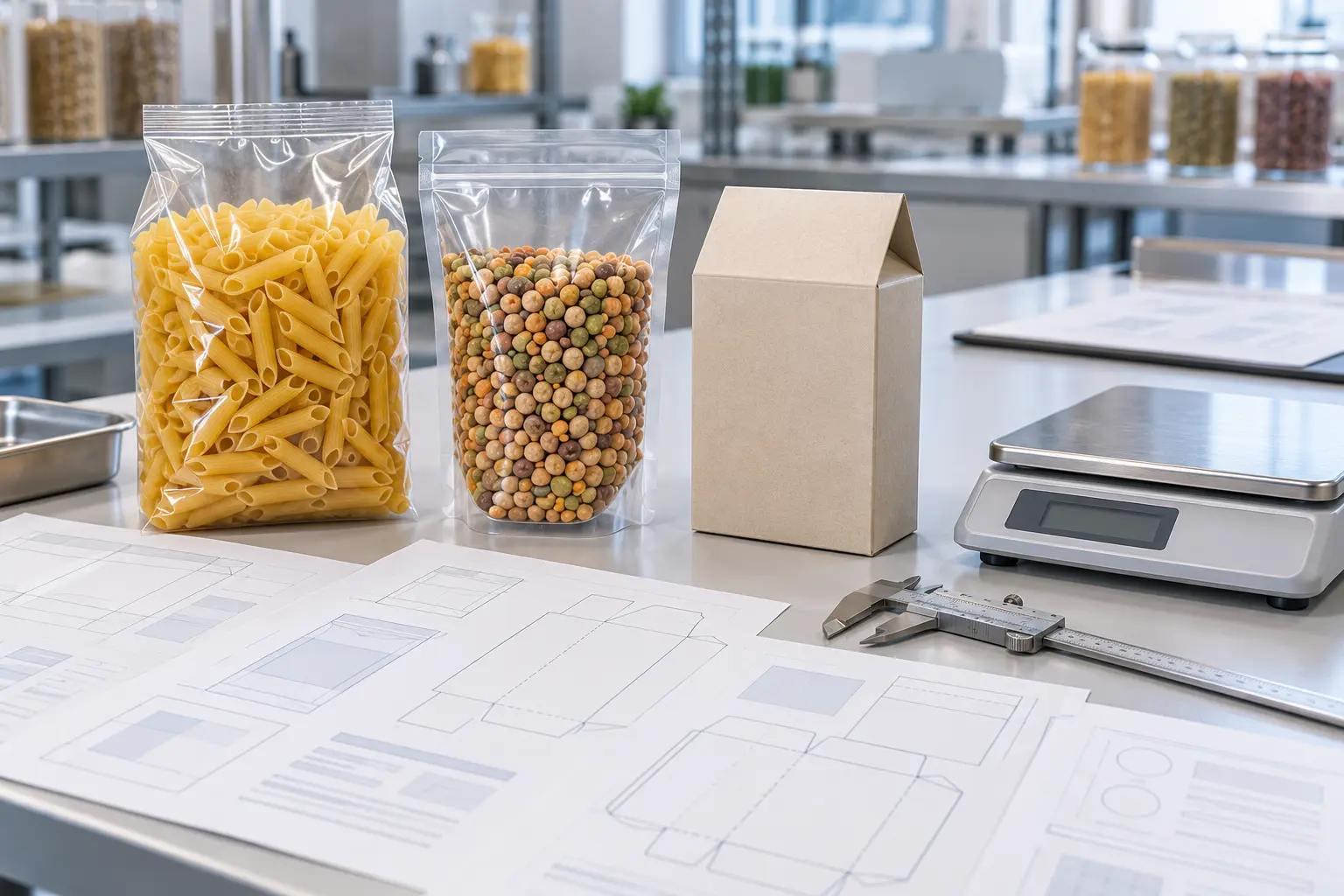
State the minimum remaining shelf life you require at dispatch and arrival, and confirm the date format and lot-code position. Compare offers at the same net quantity and pack hierarchy: a carton price is meaningless without the number and weight of units inside. For private label, assign owners for the dieline, barcode, translations and print approval; our private label process helps frame these decisions.
Approve the destination label
Reconcile the final artwork with the approved specification before printing. Check the legal product name, ingredients, allergens, net quantity, date marking, storage and preparation instructions, responsible business details, lot coding, nutrition declaration and any claims required or permitted in the destination. For EU retail, the Commission’s mandatory food information page summarises the principal particulars for prepacked food. Its language and presentation guidance notes that mandatory information must be easily understood by consumers in the Member State where the food is marketed.
Another destination may require different languages, importer details, date conventions or nutrition rules. Keep the approved artwork version with the matching SKU, sample and specification. If the recipe, supplier site, pack material or claim changes, reopen the affected review rather than copying the prior approval.
Request offers on one commercial basis
Send each candidate the same SKU table, destination, estimated first volume and expected reorder pattern. Ask for the product-specific minimum, sample route, lead time, specification, available test or compliance documents, remaining shelf life, pack data and quote validity. Request the delivery term with a named place; the ICC Incoterms® resource explains why the place is part of the rule. Our export quote request guide provides a reusable commercial structure.
A concise request could read: “Please quote three retail SKUs for [country]: pasta [shape and weight], bulgur [grain size and weight], and [pulse type and grade], each in [language] packaging. State units per carton, pallet pattern, product-specific minimum, remaining shelf life at dispatch, sample route, available specifications and the named delivery place under the proposed trade term.” Replace every bracket. EU buyers can use Access2Markets My Trade Assistant to start product, tariff, origin and requirement checks using the correct commodity code.
Use a final approval checklist
Before ordering, match the quote, specification, test references, approved sample, artwork, consumer pack and master carton to the same SKU. Confirm the agreed grade or tolerances, allergen wording, remaining shelf-life points, lot coding, change-control owner and named delivery place. Record any open item instead of treating it as approved. Availability, minimum quantity, price, certification, testing and lead time remain supplier- and SKU-specific confirmations, never assumptions from a category guide.