Define the honey before requesting price
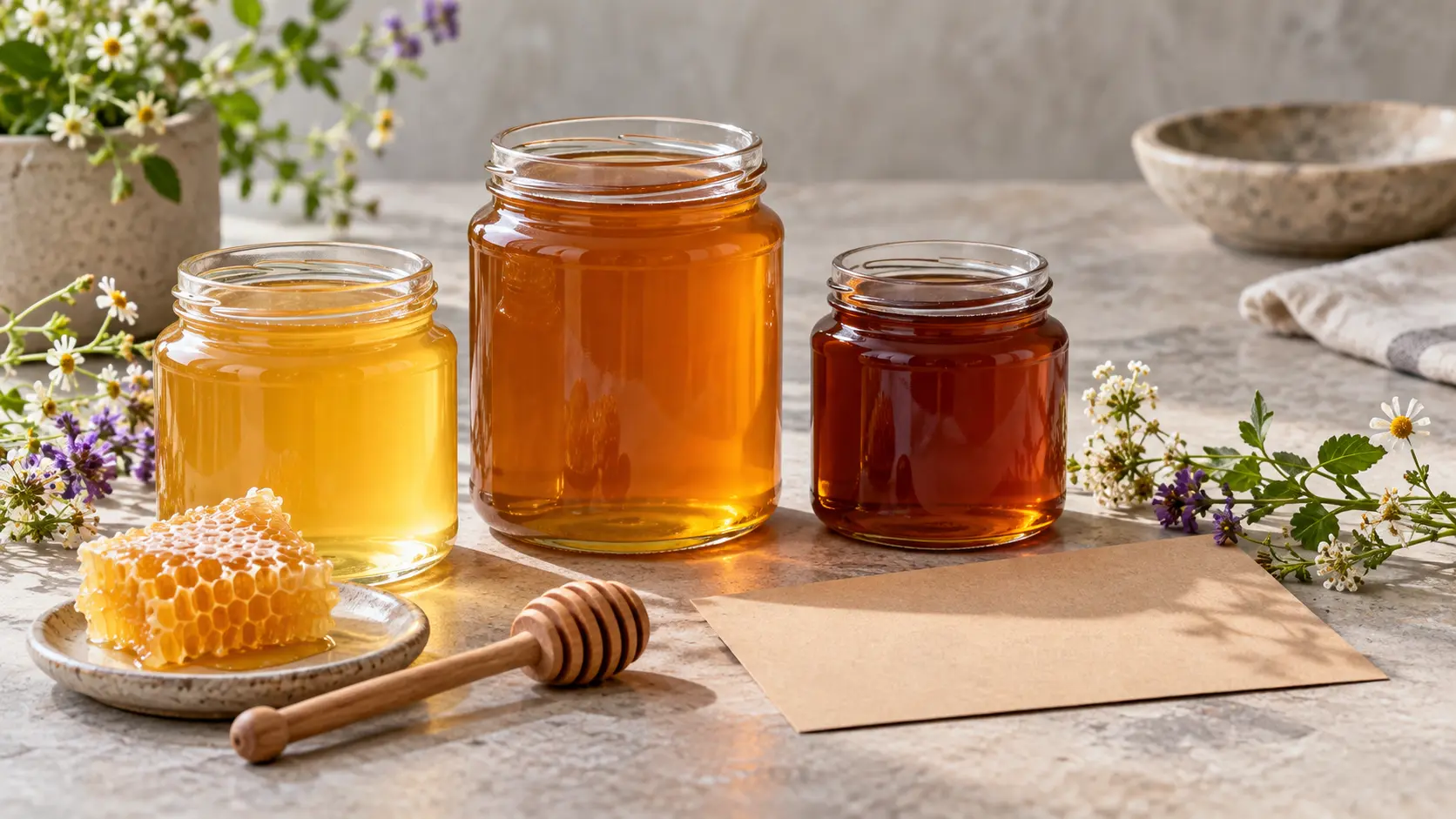
“Honey from Türkiye” is not yet a purchase specification. State whether the intended product is blossom honey or honeydew honey; monofloral, multifloral or a blend; filtered or comb honey; retail-ready, foodservice or bulk for further packing. Record the proposed botanical claim, harvest geography and harvest period separately. Colour, flavour, crystallisation and pollen profile may vary with source and processing, so a sample should be assessed against a written brief rather than a generic photograph.
Ask for a product specification for the exact offered batch or defined production programme. It should identify moisture, the relevant sugar profile, free acidity, hydroxymethylfurfural and diastase activity, together with the agreed test methods and acceptance limits. The EU Honey Directive defines honey categories and composition criteria; the buyer must still translate those legal baselines into a contract suitable for the destination market and product claim. Price, minimum order, certification, stock and lead time remain offer-specific and require written confirmation.
Design origin and label data together
Origin is both a commercial claim and a traceability field. Keep the beekeeper or collection-area records, harvest identifiers, consolidator, processor or packer, and final lot code connected. Do not reduce “packed in Türkiye” to “harvested in Türkiye”: packing location and honey origin answer different questions.
Directive (EU) 2024/1438, applied through Member-State measures from 14 June 2026, requires the country or countries where the honey was harvested to appear on the label. For blends, origins are presented in descending order by weight with percentage shares; national implementation may allow the four largest shares to carry percentages when they together exceed half of the blend. Confirm the exact destination-country implementation and artwork before printing. Build the ingredient name, net quantity, date marking, storage wording, responsible food business operator and language set from verified product data rather than copying another SKU.
Build a batch-level authenticity file
The European Commission’s coordinated action on imported honey reported a high rate of samples suspicious for added sugar syrups and highlighted falsified origin records and pollen removal as fraud risks. A suspicious analytical signal is not by itself a final legal finding, but it is a clear reason for buyers to use stronger supplier qualification and chain-of-custody controls.
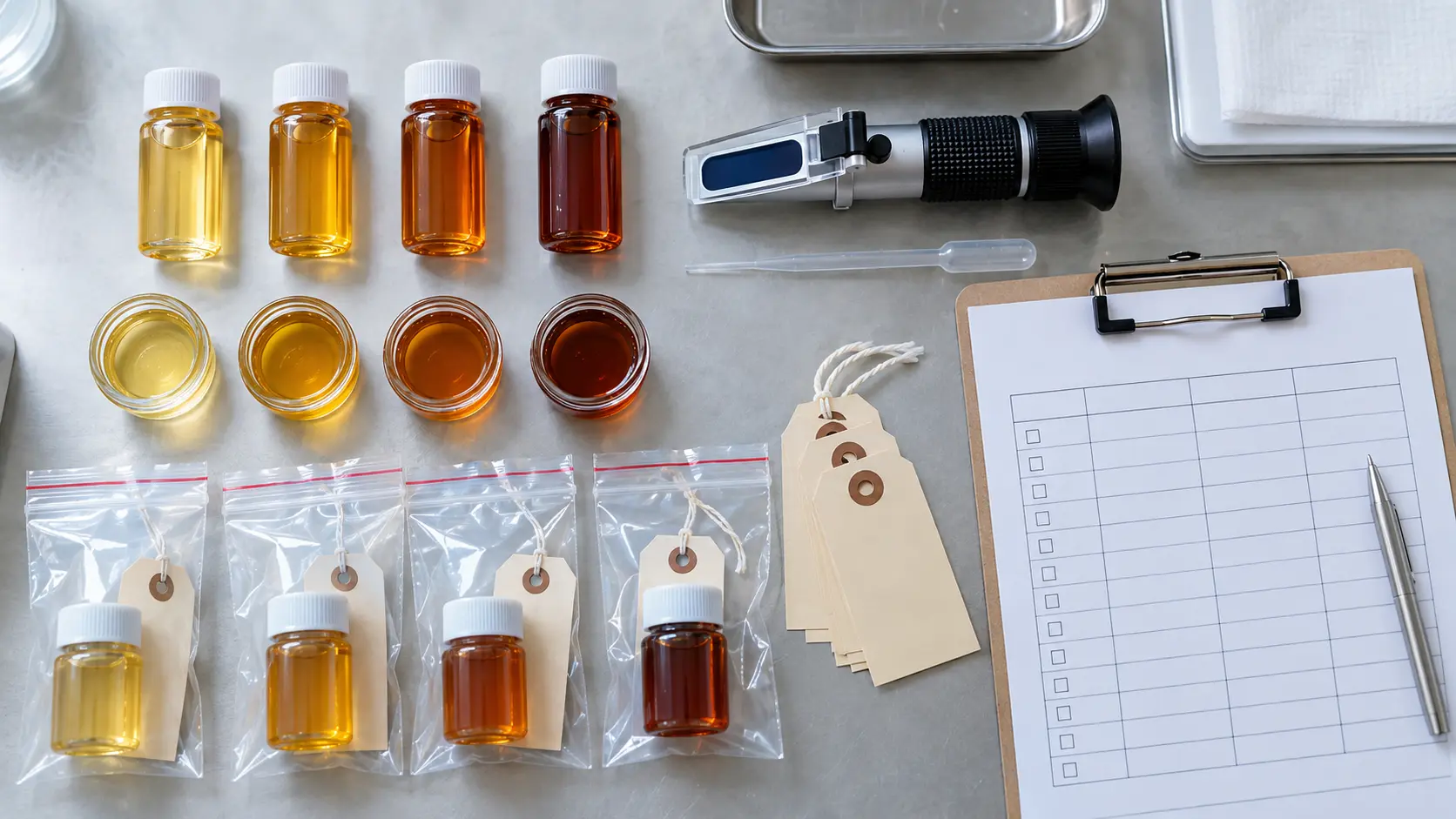
For each proposed lot, request the batch genealogy, mass-balance logic, sampling record, laboratory identity, method scope and the complete report—not only a “pass” line. Agree who selects the sample and whether a retained, sealed counter-sample will be held. Match every report to the lot, production date and product description on the commercial documents. No single test proves every form of adulteration, so the control plan should combine documented traceability, supplier due diligence and risk-based analysis.
Verify the EU entry route before shipment
Honey is a product of animal origin. Before confirming a shipment, the importer and exporter should verify that the origin country is currently eligible for the relevant product and that every establishment dispatching, obtaining or preparing the honey appears on the applicable EU list. The Commission explains that non-EU establishment lists are maintained in TRACES and linked to country listing under the relevant public-health rules. Names, addresses and approval identifiers should match the quotation, specification, health certificate and transport documents.
The Commission also states that honey consignments require the applicable official health certificate and are handled through the EU’s TRACES control workflow. Confirm the correct certificate model, border control post, pre-notification, CHED responsibility and document originals with the importer and competent authority before loading. A supplier’s past shipment or a certificate used for another market is not evidence that the planned consignment is eligible today.
Approve the pack and shelf-life assumptions
For retail jars, approve jar material, nominal fill, closure, induction or tamper feature, label area, carton dividers and pallet pattern. For bulk honey, define drum or pail lining, closure, net weight, food-contact declaration and handling conditions. Run a transport-pack review with the actual jar and closure; viscosity and crystallisation behaviour can affect filling and consumer presentation.
State the required remaining shelf life at arrival and the storage conditions on which it depends. If gentle warming or decrystallisation is proposed, require the process parameters and confirm that the finished product still meets the agreed specification. The private-label programme overview helps organise artwork and pack responsibilities, while the grocery staples page places honey within a broader mixed-range brief.
Send one comparable buyer checklist
- Product type, botanical statement, harvest country or countries and harvest period
- Retail, foodservice or bulk format; net weight; closure; carton and pallet configuration
- Batch specification, acceptance limits, methods, sampling plan and retained sample
- Traceability chain, listed establishments and proposed official certificate route
- Destination label languages, origin declaration and artwork approval owner
- Requested volume, destination, named Incoterm place, timing and required remaining shelf life
- Written confirmation of price, minimum order, lead time and any claimed certification for the exact offer
Ask every bidder to answer the same sheet and mark deviations explicitly. The comparable export quote guide provides a structure for delivery terms and exclusions. Use the Marnivo inquiry form to share the product, market and pack brief for a case-specific review.